
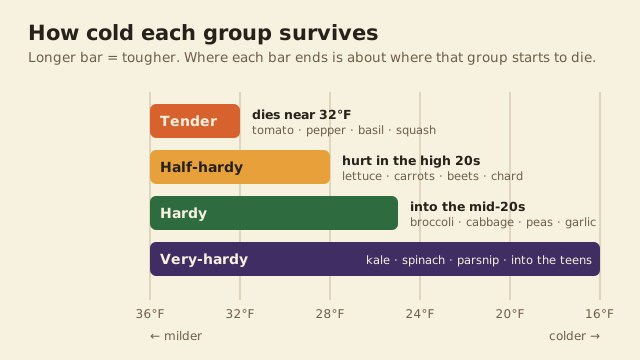
Hardy and very-hardy vegetables — most greens and root crops — take a frost in stride; tender crops like tomatoes, peppers, and basil die near 32°F. GardenTrack sorts 38 crops into four groups: tender, killed by a light frost; half-hardy, fine through a light frost but not a hard freeze; hardy, good into the mid-20s; and very-hardy, into the low 20s.
Which vegetables tolerate frost — and which are at risk tonight
Frost isn't all-or-nothing. A night at 32°F kills a tomato and does nothing at all to a kale plant standing next to it.
So the first job on a cold night is working out which of your plants even care. Most of them don't. Not sure when frost usually turns up where you are? Look up your frost dates first.
Find your crop, check the middle column against tonight's low, and you know what to cover. The four groups are ours — we sorted 38 crops by how much cold each takes. The temperatures are the universities', every one cited at the foot of the page. The grouping is ours. The numbers are theirs.
| Frost group | Damaged around | Common crops |
|---|---|---|
| Tender | A light frost, 28–32°F | Tomatoes, peppers, eggplant, basil, cucumbers, summer and winter squash, pumpkins, beans (bush and pole), sweet corn, melon, watermelon, okra, and sweet potato. The warm-season ones start to sulk below 50°F, well before any frost. |
| Half-hardy | A hard freeze, the mid-to-upper 20s | Beets, carrots, celery, cauliflower, Swiss chard, kohlrabi, head and leaf lettuce, dill, fennel, and potato tops. A light frost doesn't faze them; a hard freeze does. |
| Hardy | A hard frost, about 24–28°F | Broccoli, cabbage, Brussels sprouts, collards, parsley, turnips, radishes, peas, garlic, and strawberries. Most shrug off a hard frost, and several taste better after one. |
| Very-hardy | The low 20s, near 20°F and lower under cover | Kale, spinach, parsnips, and onions. The toughest of the bunch — some keep going into the teens, and parsnips take even more. |
How to read this table
The middle column is the cold that finally hurts that group. Anything warmer, they take in stride. Tender is the exception — that column is the frost that kills them outright.
Two plain-word definitions, since the forecast throws these around. A light frost is a short dip to around 28 to 32°F. A hard freeze is colder and longer — the National Weather Service puts it at 28°F or below for a good stretch, cold enough to kill most plants (National Weather Service). And half-hardy just means in-between: it handles a light frost but folds in a hard freeze.
On the forecast itself, the National Weather Service ties frost to lows below about 36°F, a widespread freeze to 32°F, and a hard freeze to 28°F (National Weather Service). Those three numbers line up with the top rows here.
One honest note up front: these are typical thresholds, not guarantees. Where a crop lands shifts with the variety, how old the plant is, and whether it's had time to toughen up to the cold — more on that at the end2.
The tender crops — cover these or lose them
These die at the first frost. All fifteen of them: tomatoes, peppers, eggplant, basil, cucumbers, summer and winter squash, pumpkins, bush and pole beans, sweet corn, melon, watermelon, okra, sweet potato.
Frost is coming and you want to keep them? Cover them, or pick what's ready. Those are the options.
It takes a light frost, right around 32°F. Iowa State University Extension puts damage on tomatoes and peppers below about 36°F, and death at 32°F or colder. One light frost turns the leaves black and slimy. The plant is finished.
Some of these don't even wait for frost. The warmest-loving ones — tomato, pepper, cucumber, melon, squash, corn — start to suffer at temperatures below 50°F, well above freezing32. Basil is the drama queen of the group: its leaves blacken when the thermometer merely dips into the 40s°F3. And sweet potato roots take chilling damage below 54°F, so you dig them before the soil goes cold, not just before the first freeze (Alabama Cooperative Extension).
So beat the freeze. Pick the tomatoes green and ripen them on a counter at room temperature, one layer deep, not touching12. Melons and pumpkins pulled ahead of a hard freeze carry on ripening indoors too3.
A frost-killed plant gives you nothing. A picked-early one gives you weeks.
Cold night coming and you've still got tender crops out? Here's how to cover them the right way — before dark, all the way to the ground, off the leaves.
The tough ones — usually leave them be
Now the good news, and it's most of the fall garden. Thirteen crops here take a frost and carry on, and several taste better afterwards. On a normal frost night they need nothing from you. Go back inside.
The hardy group: broccoli, cabbage, Brussels sprouts, collards, turnips, radishes, peas, garlic, strawberries. They take a hard frost into the mid-20s. South Dakota State puts the cabbage family at 24 to 28°F, and Iowa State says the hardy ones come through into the mid-to-low 20s36.
A few sit on the border. Some extensions file radishes a notch softer, and garlic, peas and strawberries are here on their reputation as tough cool-season crops rather than one published cutoff7.
Garlic is the odd one. You don't protect it from winter — you plant it in fall on purpose and leave it out there all the way through. If it's on your list, get it in before the ground freezes.
The toughest four we grow: kale, spinach, parsnips, onions. Nebraska Extension says the truly hardy ones keep growing until about 20°F.
The champions go further. Penn State rates parsnips down to 0°F, and established spinach rides out the teens under a row cover or a foot of snow (Penn State Extension; Ohio State University Extension). Snow is insulation, which sounds wrong until the first year you see it.
And frost makes a lot of this sweeter, which nobody tells beginners. Cold makes the plant turn stored starch into sugar. Kale, collards and Swiss chard sweeten after a frost, and Brussels sprouts are often best once they've had one93.
Root crops do it too. Carrots, turnips, beets and parsnips build sugar once the soil drops below about 40°F3. So on the tough half of your garden, the cold night you were worried about is the one doing the work.
Very hardy is not indestructible. Everything has a floor. Penn State notes some turnip varieties struggle below 10°F even under cover10. Very-hardy means it shrugs off the low 20s and often the teens. It can still be killed.
Two of our calls sit at the high end of what the extensions say, and we should be straight about it. We rate onions and spinach very-hardy. Some extensions call them semi-hardy. Both are right, because a soft young transplant is a different plant from a mature cold-toughened one7.
The in-between crops — watch the forecast
In-between, and it's the group worth actually reading a forecast for. A light frost doesn't bother them. A hard freeze does. Ten crops: beets, carrots, cauliflower, Swiss chard, kohlrabi, head and leaf lettuce, dill, fennel, potato tops.
The dividing line is a light frost versus a hard freeze. These survive a light frost of about 28 to 32°F — Iowa State says cool-season crops often come through down to 28°F, sometimes even 26°F, with little damage, and Nebraska pegs the semi-hardy crops at 30 to 32°F67. Below the mid-20s is where they start to go. A minor nip? They usually bounce back in a week or two6.
Lettuce is the soft one. Young leaf lettuce goes to mush in a hard frost, so cover it if a real freeze is coming9.
Beets and carrots care much less. The part you eat is underground, where it's warmer, and the leaves taking a hit costs you very little. Some extensions rate kohlrabi and carrots hardier than we do, which is one more reason to read every number here as a ballpark.
Potato is the odd one, and worth a word. We file potato tops as half-hardy because the leaves are frost-tender and die back around 32°F — but the tubers are safe underground and ride out cold that kills the plant on top. That's why the extensions can't agree on it: South Dakota lists potato with the frost-tender crops, while Michigan State files it with the hardy ones39. Both are right. They're just talking about different ends of the plant.
How to use this with your own frost dates
The table tells you which plants are at risk. It can't tell you when that risk arrives in your yard, and that's the other half of the answer.
So pair it with your own frost dates. Look up how likely frost is for your spot and time of year, and you'll know roughly when to start watching the forecast for the tender stuff. The table says what's fragile; your frost dates say when to worry.
Then on the night itself, one question first: is it even going to frost? Clear sky, calm wind, dry air — that combination is what tips a cold night over, and reading it in your own yard is a skill worth ten minutes.
If the answer is yes and you have tender or half-hardy crops out, cover them properly. Before dark, all the way to the ground, off the leaves.
The question everybody asks: what temperature do I cover at? For tender crops, start paying attention when the low is headed for the mid-30s6.
Know what a sheet actually buys you. About 3 to 5°F. That carries a plant through a light frost and does nothing in a hard freeze — Utah State says lean on a cover down to about 28°F and below that it mostly stops helping26. Take it off in the morning once you're back above freezing.
One honest caveat: these are ballpark numbers
Every temperature here is typical, not promised. The same crop can take several more degrees of cold depending on how it was raised.
First, the plant itself. A crop's cold tolerance isn't a fixed number — it shifts with the variety, how far along the plant is, the soil temperature, and whether it's been 'hardened off,' which just means slowly gotten used to the outdoors over a week or two instead of going straight from a warm windowsill into a cold night2. A toughened-up plant survives cold that would kill the same plant soft.
Second, protection. A plant under a cover, with mulch over its roots and moist soil holding the day's heat, takes more cold than a bare, exposed one. The numbers here are for unprotected plants on an average night.
Third, your own yard. The forecast low is measured five feet off the ground out in the open, and cold air sinks — so a low spot or an open bed can run several degrees colder than the number on your phone. We won't pretend to know the exact temperature one of your beds will hit tonight; nobody honestly can. What the four groups give you is the thing that doesn't change: which plants to worry about, and roughly how cold it takes to hurt each one.
Frost-tolerant vegetables FAQ
What vegetables can survive frost?
More than people expect. The hardy and very-hardy crops — kale, spinach, cabbage, broccoli, Brussels sprouts, collards, carrots, turnips, parsnips, onions, and more — take a hard frost into the mid-20s or lower, and several taste sweeter for it<a class="cite" href="#source-3">3</a><a class="cite" href="#source-7">7</a>. The ones that can't survive a frost are the tender, warm-season crops: tomatoes, peppers, basil, squash, cucumbers, beans, and corn, which die at a light frost near 32°F.
What temperature kills tomato plants?
A light frost kills it. Right around 32°F. The leaves are damaged once it drops below about 36°F, and the plant can't survive a freeze at 32°F or colder<a class="cite" href="#source-6">6</a>. Tomatoes also stop doing well in plain cold, below about 50°F, long before frost. If a frost is coming, cover the plant or pick the fruit — even green tomatoes ripen fine indoors<a class="cite" href="#source-12">12</a>.
Do I need to cover kale or spinach?
Usually not. Both sit in our very-hardy group. Kale, spinach, parsnips and onions are the toughest we track. Nebraska Extension says truly hardy vegetables keep growing down to about 20°F, and established spinach rides out the teens under a row cover or snow (University of Nebraska–Lincoln Extension; Ohio State University Extension). Save your sheets for the tender stuff. One exception: young, tender spinach seedlings are softer than mature plants. So cover those if a hard freeze is coming.
Which vegetables get sweeter after frost?
Kale, collards, Swiss chard, and Brussels sprouts, plus root crops like carrots, turnips, beets, and parsnips. When it gets cold, these plants turn stored starch into sugar. So they taste noticeably sweeter after a frost — Brussels sprouts are often best once they've had one, and root crops sweeten as the soil drops below about 40°F<a class="cite" href="#source-9">9</a><a class="cite" href="#source-3">3</a>.
What does 'frost tolerant' mean?
It means a plant can take a frost — a short dip to around 28 to 32°F — without being killed or badly damaged. Frost-tolerant crops are the cool-season ones: greens, cole crops like cabbage and broccoli, and root crops. The opposite is a tender crop, which is 'injured or killed by frost'<a class="cite" href="#source-14">14</a>. Frost tolerance isn't all-or-nothing, though — some crops take only a light frost, while the hardiest shrug off a hard freeze into the low 20s.
What's the difference between cold-hardy, half-hardy, and tender?
It's how much cold each one takes. Tender crops (tomatoes, peppers, basil, squash) are killed by a light frost near 32°F. Half-hardy crops (lettuce, beets, carrots, chard) survive a light frost, about 28 to 32°F, but not a hard freeze in the mid-20s. Cold-hardy crops (kale, cabbage, broccoli, spinach) take a hard frost into the mid-20s and often the low 20s<a class="cite" href="#source-3">3</a><a class="cite" href="#source-6">6</a>. Same idea as the four groups in this guide — tender, half-hardy, hardy, very-hardy — just fewer buckets.
Sources
Every planting date, depth, and temperature on this page traces to these university extension guides. Where they differ, the ranges above hold the whole spread.
- Utah State University Extension — Starting Vegetable Seeds Indoors: I. Planning
- Utah State University Extension — Five Ways to Protect Plants from Dipping Temperatures
- South Dakota State University Extension — Fall Frost Tolerance of Common Vegetables
- Iowa State University Extension and Outreach — Fall Planting of Vegetables
- Iowa State University Extension and Outreach — Cold and Freeze Damage to Garden Plants
- Iowa State University Extension and Outreach — How to Protect Plants from Frost and Freeze
- University of Nebraska–Lincoln Extension — Fall Vegetable Gardening (G1343)
- Michigan State University Extension — Identifying and preventing freeze damage in fall vegetables
- Michigan State University Extension — Can I harvest garden vegetables after a frost?
- Penn State Extension — Season Extenders and Growing Fall Vegetables
- Ohio State University Extension (Growing Franklin) — Growing Spinach Over Winter Using Low Tunnels and Row Cover
- University of Minnesota Extension — Growing tomatoes in home gardens
- Alabama Cooperative Extension System — Harvesting and Curing Sweet Potatoes
- University of Illinois Extension — Time Your Vegetable Plantings by Cold Hardiness
- National Weather Service (NOAA) — Fall Frost and Freeze Information (Northern Indiana)
- National Weather Service (NOAA) — Glossary — Hard Freeze
Frost-tolerant vegetables, sorted: which crops survive cold and at what temperature, in four groups from tender to very-hardy. The groups are GardenTrack’s own, compiled from our plant database; every temperature traces to the US extension and National Weather Service pages listed above.
Knowing which plants care is half the battle. The other half is remembering it — which of your beds are tender, which shrug off a frost, and what the forecast's doing tonight.
That's the whole idea behind GardenTrack: a garden app that remembers every plant you've got and tells you what to do and when, including a heads-up when frost's in your local forecast. The free app is open now. Want to try it? Start free.