







The beta is opening · invites going out
The gardening app that remembers

GardenTrack remembers your garden so you don't have to.

Tired of pouring time into your garden and still guessing why your plants die? Tell it what you're growing. It tells you what to do — the right task, at the right time, for your spot.

Free, no credit card. We're letting people in a few at a time — drop your email and we'll send you an invite. Founding Gardeners lock their price for life.

Vintage magazine-ad style painting: a gardener lunges to set a tomato seedling into a raised bed, coat flaring like a cape, dramatic side light
The real problem

You water, you wait, you Google. And half of it dies with no idea why. That's not you being bad at this. That's the guessing.

We've killed 'em too — a hundred starts, gone to one frost we forgot to check. The problem was never you. It's that nothing remembers your garden and tells you what's next.

A painted raised bed of frost-killed tomato plants slumped in the soil under a saturated violet-to-magenta dawn, the rightmost plant breaking apart into drifting pixels — a garden lost to a frost no one saw coming
How it works

No grid to draw at a computer. No notebook to keep up. Tell GardenTrack once — that's the whole setup.

1

Tell GardenTrack what you planted

Add your plants just by talking to GardenTrack — every plant, and where you put it, built out for you in about a minute.

"Four Cherokee Purple, north bed."
2

Know what to do today

GardenTrack tells you what to do today — and what's coming this week. Never guess again.

"Run the hose 60 seconds on each pepper."
3

GardenTrack remembers, so you don't

Every plant, every season, kept for good — so next year's easier than this one.

"Harden off your tomato starts this week."
Why it's different

Chat apps, plant-ID apps, planners, almanacs — every one of them leaves you holding the memory. Here's the difference, one at a time.

It forgets the second you close the tab.

Ask ChatGPT and you re-explain your whole garden every single time — what's planted, where, how it's doing. It's smart, but it starts from zero on every chat.

GardenTrack already knows your three blueberry plants are in the north bed. So when frost's coming, it just tells you to cover them.

A name isn't a plan.

Snap a photo, get an ID — and then what? Plant-ID apps answer "what is this?" once and move on. They never keep a record of your bed through a season.

GardenTrack logs each plant by where it actually lives, then follows it from the day it goes in to the day you pull it.

Their reminder arrives whether or not the seed came up.

Planners do give you a calendar — a task list counted forward from the day you said you planted. That is the catch. It arrives on schedule whether the seed came up, drowned, or never went in, because nothing is watching the plant.

GardenTrack knows what each crop should be doing by now — 229 checkpoints across 149 crops — so it can tell you when the thing that was supposed to happen didn't. A date cannot see that.

Great advice — for a generic garden.

The Almanac tells everyone the same thing. It can't see your beds, doesn't know what you planted, and can't remember last year. "Year one is a learning year" isn't a to-do.

GardenTrack is keyed to your plant, your spot, this week — and it remembers, so next year isn't another year one.

A painted garden under violet dusk, whole on the left and progressively dissolving into drifting pixels toward the right — memory fading A single potted plant beside a phone showing a one-tap plant-ID result and nothing else — a name with no record of the bed around it A laptop on a cold winter desk showing a rigid grid garden plan, a steaming mug, snow out the window — planning divorced from the living garden An open almanac whose pages repeat the same cookie-cutter garden over and over — one-size-fits-all advice that cannot see your beds
A year, remembered

  • May 3 — set out four tomato starts.
  • Jun 19 — first flowers. Caged 'em Saturday.
  • Aug 12 — first ripe one. Ate it warm, right there.
  • Oct 2 — 26 pounds off this one bed.
  • Nov 4 — frost tonight. Put the bed to sleep.

Next spring, it remembers all of this.

A painted raised wooden garden bed at the peak of summer — a tall tomato plant heavy with ripe red tomatoes, cultivated crop rows running to the horizon under a smooth gold-to-violet gradient sky
What you get

Every plant, remembered

Name each one and it remembers every one — where it is, when it went in, what you did last. Your whole garden, held for you.

A heads-up before frost

When frost's in your local forecast, you get a heads-up — so you can cover up before it hits. It won't save every plant. But you'll get the warning in time to act.

Works out at the beds

No signal in the back corner of the yard? It still works. Everything's on your phone and syncs when you're back.

Figure out what's wrong

Snap a photo of the one that's struggling. Because it knows what's in that bed and what you've done, you get a read that fits your garden — not a generic web answer.

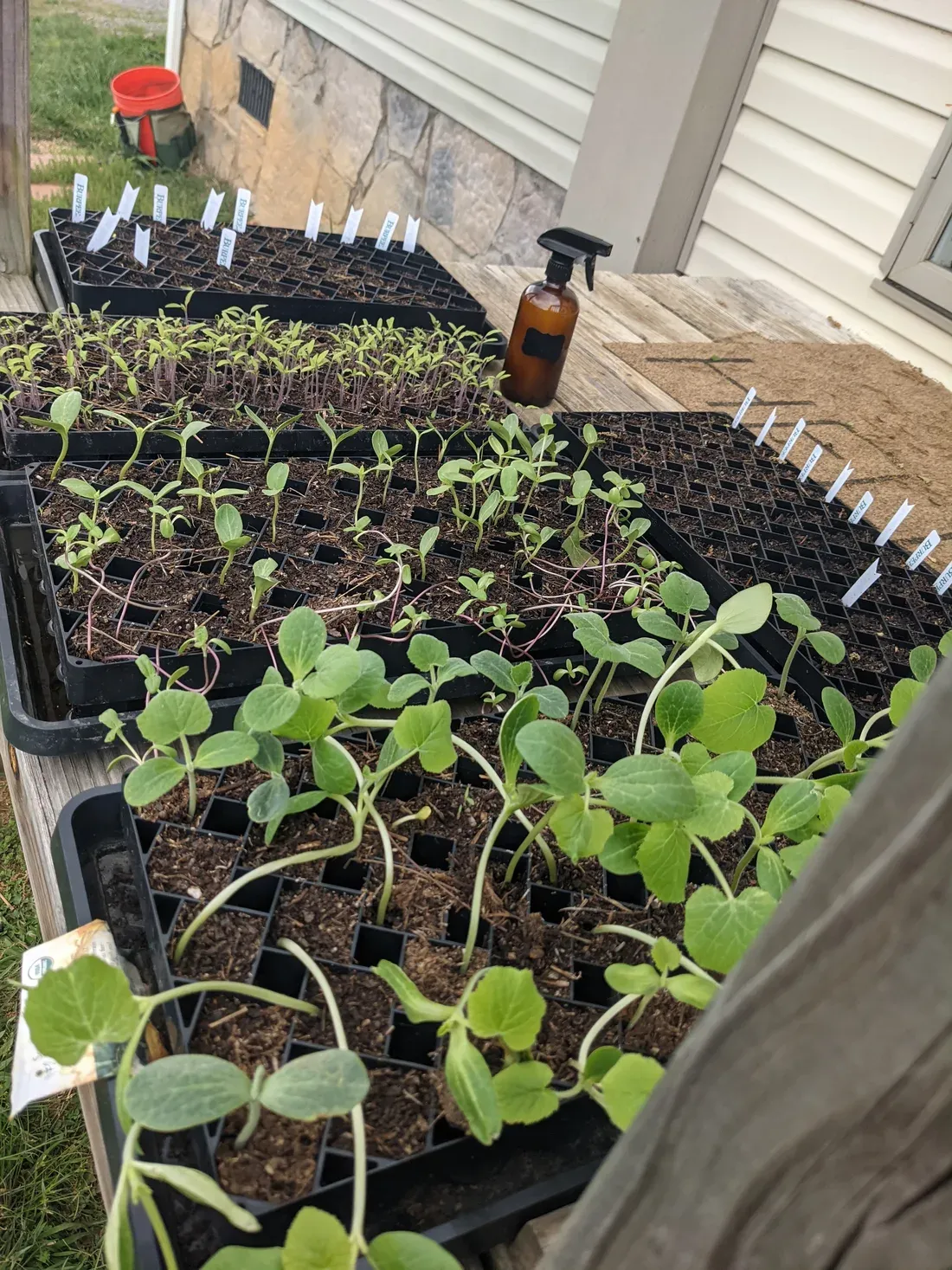
A flat of home-started tomato, squash and cucumber seedlings in cell trays on a back porch — the founder's actual seed starts, spring 2023
My actual starts — the day before I lost the whole flat. Spring 2023. Never got a photo of them after.
Why I built it

Every app I tried was too cumbersome, or just didn't help. So I built the one I actually wanted.

That's my flat up there — the day before a frost I forgot to check for took the whole thing. Weeks of starts, gone in one night. I was done guessing. I wanted something that just remembers my garden and tells me the next thing to do. So I made it. That's the whole idea.

Where it gets you

So you spend less time, lose the stress, and grow more food than you can eat. Too many zucchini. Even the chickens'll get sick of 'em.

A painted 1950s gardener carries an overflowing harvest crate up the garden path at dusk, porch lantern glowing against a saturated magenta-violet sky
Get in early

Tell it what you're growing. It'll tell you what to do.

The beta is opening and we're letting people in a few at a time. The core app is free — the whole working loop, no credit card. Drop your email and we'll send you an invite.

  • Free core, forever. Unlimited plants, per-plant memory, today's tasks, your week, the journal, frost dates and sync. No card.
  • Founding Gardeners lock in Plus at $39/yr (about $3.25/mo) for life — plus every new feature the day it ships.
  • 60-day, no-questions refund when there is something to pay for. Nothing is paid today.

No spam. Just your invite when it is your turn. Unsubscribe anytime.