

Companion Planting Chart
Pick a crop and see its good and bad neighbors, each with the evidence behind it — tap any pairing for the why, and the myths this chart won't repeat.
Pick a crop to see its good and bad neighbors
Keep what's planted where, bed by bed.
The full chart — 19 crops, friends and enemies
| Crop | Good neighbors | Keep apart from |
|---|---|---|
| Tomatoes | BasilT, Onion familytr, Carrotstr, LettuceP, Sweet alyssumT, French marigoldsT | Potatoes, Corn, Fennel, Cabbage family, Black walnut trees |
| Peppers | Basiltr, Onion familytr, Sweet alyssumT | Fennel, Black walnut trees |
| Eggplant | Beanstr, French marigoldstr, Sweet alyssumT | Potatoes, Black walnut trees |
| Potatoes | Beanstr, Cabbage familytr, Corntr, Horseradishtr | Tomatoes, Squash & cucumbers, Sunflowers, Black walnut trees |
| Beans bush & pole | CornP, SquashP, Cucumberstr, Radishestr, Summer savorytr | — |
| Peas | Carrotstr, Radishestr, Cucumberstr, LettuceP | — |
| Carrots | Onion familyT, Peastr, LettuceP, RadishesP | Dill |
| Beets | Onion familytr, Cabbage familytr, LettuceP | — |
| Radishes | CarrotsP, Peastr, LettuceP, Cucumberstr | — |
| Onion family onions, garlic, leeks, chives | CarrotsT, Beetstr, Lettucetr, Cabbage familytr, Tomatoestr | — |
| Lettuce | CarrotsP, RadishesP, Strawberriestr, Tomatoes or cornP, Sweet alyssumT | — |
| Spinach | Strawberriestr, PeasP, RadishesP | — |
| Cabbage family broccoli, cabbage, kale, Brussels sprouts, cauliflower | Dill (flowering)T, Leafy companions & aromatic herbsT, Radish or mustard trap stripT, Nasturtiumstr, Beetstr, Onion familytr, Potatoestr | Tomatoes |
| Squash & pumpkins zucchini too | CornP, BeansP, NasturtiumsT, Sweet alyssumT, Blue hubbard squash (trap crop)T, Radishestr | Potatoes |
| Cucumbers | Beanstr, CornP, NasturtiumsT, Peastr, Radishestr, Sunflowerstr | Potatoes |
| Corn | BeansP, Squash & pumpkinsP, Cucumberstr, Peastr, Potatoestr | Tomatoes |
| Basil | TomatoesT, Pepperstr | — |
| Strawberries | Bush beanstr, Spinachtr, Lettucetr, Boragetr | — |
| Melons cantaloupe, muskmelon | Corntr, Sunflowerstr, NasturtiumsT | Potatoes |
Tags: T = trialed (research behind the mechanism) · P = practical (space-and-light logic) · tr = traditional (chart canon, thin evidence).
How to read this chart
"Companion planting" covers four different things that get lumped together: pest confusion (mixed smells and shapes make your crop harder to find), trap cropping (a sacrificial plant pulls the pests off the one you care about), shade sharing (tall crop shelters heat-shy crop), and flowers that feed the insects that eat your pests.
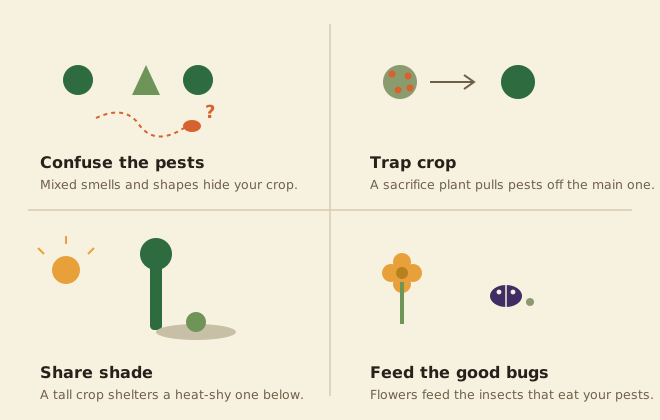
The tags tell you how much weight each pairing can hold. Trialed means there's real research behind the mechanism. Practical means it's plain space-and-light logic — no study needed to know lettuce likes shade in July. Traditional means it's been on the charts for decades with thin evidence either way. Fine to follow when it's easy. Not worth re-planning a bed over.
And the honest caveat that outranks the whole chart: sun, water, and spacing matter more than any pairing. A basil plant crammed against a tomato stem helps nobody — work out how far apart to plant them first, then pick the neighbors.
The pairings that actually earn their spot
If you only take four things from the research, take these:
- Flowers that feed the good bugs. Sweet alyssum's little flowers feed hoverflies, and hoverfly larvae eat aphids. Commercial lettuce growers in Salinas interplant it on purpose. It works next to any crop that gets aphids.
- Mixed smells around brassicas. Strong-smelling herbs (sage, rosemary, mint in a pot) interplanted with cabbage-family crops make them harder for pests to find. Real research, modest effect.
- Trap crops. A sacrificial blue hubbard squash at the bed edge pulls cucumber beetles off your main planting. A radish-and-mustard strip pulls flea beetles off young brassicas — mixes of three-plus trap species beat any single one.
- Dill flowers near the cabbage bed. Let some dill bloom: its flowers feed the tiny parasitoid wasps that hunt cabbage worms. (Just keep mature dill away from the carrot row.)
What not to plant together
The short list with a real reason behind it — a shared disease, a shared pest, a documented chemical, or plain competition:
| Keep apart | Why |
|---|---|
| Potatoes + tomatoes | Same family, same late blight — it moves both ways. One sick bed infects the other. |
| Corn + tomatoes | Corn earworm and tomato fruitworm are the same moth. Side by side, you set its table twice. |
| Carrots + flowering dill | Both are in the carrot family and both feed the carrot rust fly, so together they concentrate the pest. (Not the myth that dill "stunts" carrots — they can't even cross-pollinate.) |
| Potatoes + squash, cucumbers or melon | Two heavy, sprawling feeders fighting for space and water, and hilling potatoes tears up shallow cucurbit roots. Competition — not the chart's shared-disease story (potato blight can't infect cucurbits). |
| Fennel + almost everything | Genuinely allelopathic: its foliage and seeds are rich in compounds (trans-anethole) that suppress nearby plants in the lab. The lore overstates it, but the chemistry is real — give it its own pot. |
| Any vegetable bed + black walnut | Walnut roots release juglone; tomatoes, peppers, potatoes, and eggplant are all on the sensitivity list. Keep beds clear of the canopy and root zone. |
The most famous "never" — onions or garlic next to beans and peas — isn't on this list because the evidence doesn't support it. Pick those crops in the tool above and the myth-check explains why.
Companion planting by crop
Tomatoes. Basil and alliums by tradition, lettuce for the shade trade, alyssum for the aphid patrol. The real rules are the don'ts: no potatoes, no corn, no fennel.
Peppers. Same playbook as tomatoes, smaller plant. Basil and onions alongside; alyssum nearby earns its spot the same way.
Squash and zucchini. The Three Sisters ground floor — under corn with beans climbing above. The trialed trick: one sacrificial blue hubbard at the edge as a beetle magnet.
Carrots. Interplanted onions confused carrot rust fly in some trials, did nothing in others. Radishes mark the row and leave early. Keep mature dill out of it.
Beans. Corn is the original trellis, squash is the living mulch. And the one rule every chart repeats — no onions or garlic near beans — is a myth: the worst an onion does is out-compete a bean it's crowding, and garlic has actually helped legumes in trials.
Sources
The pairings and their tags trace to these. When a claim couldn't be sourced, it didn't make the chart.
- West Virginia University Extension — Companion Planting The classic companions-and-incompatibles chart. Most rows tagged traditional trace here.
- University of Minnesota Extension — Companion planting in home gardens The evidence review behind many tags: nasturtium and alyssum around squash, basil reducing thrips on tomato, trap strips for flea beetles, and which repellent-plant folklore fails testing.
- Washington State University Extension (L. Chalker-Scott) — The Myth of Companion Plantings The horticulture-science review that finds no scientific basis for the classic antagonist lists — the citation behind our "myth" entries and the honest wording of traditional rows.
- Mississippi State University Extension — Companion Planting: Myth or Truth? Extension review separating proven pairings from the many that "lack any scientific proof."
- Brock University (An, M.Sc. thesis) — Interactions of onion and yellow wax bean in monoculture and intercropping The controlled onion x bean trial: intercropping modestly reduced bean growth (resource competition, not chemistry) while the combined system stayed productive — the real, mild basis behind the allium-legume myth.
- Scientific Reports (peer-reviewed) — Response of faba bean to intercropping with garlic against broomrape and root-rot diseases Garlic (an allium) intercropped with faba bean (a legume) cut disease and raised yield ~31% — evidence against a general "alliums harm legumes" mechanism.
- Penn State Extension — Allelopathy in the Home Garden; Gardening Around Walnuts (juglone) Allelopathy basics and the black-walnut/juglone rule (which crops are sensitive).
- El-Kenany & El-Darier (allelopathy study) — Allelopathic Potential of Fennel (Foeniculum vulgare) Fennel fruit/foliage extracts (rich in trans-anethole) suppressed germination and seedling growth across species — the documented chemistry behind the fennel rule.
- Kamal et al. / PMC (allelopathy research) — Sunflower allelopathy; allelopathic impact of sunflower on seedlings Sunflowers release phenolic allelochemicals that measurably reduce germination and growth of susceptible neighbors — the real basis for keeping them away from a potato bed (plus plain competition).
- University of Connecticut Home & Garden Education / IPM — Verticillium Wilt; Perimeter Trap Cropping for Summer Squash Verticillium is a broad-host SOIL pathogen managed by multi-year rotation (not row spacing); and the blue-hubbard perimeter trap crop that cut cucumber-beetle damage up to ~95%.
- UMass Amherst Center for Agriculture — Strawberry IPM — Verticillium Wilt; Phytophthora Blight Strawberry Verticillium risk after solanaceous/cucurbit crops — and why a brassica before strawberries (biofumigant) helps rather than harms.
- UF/IFAS Extension — Marigolds (Tagetes spp.) for Nematode Management (NG045) French marigold suppresses root-knot nematodes via alpha-terthienyl ONLY as a dense stand grown ~2 months before the crop — interplanting a few does not work.
- Finch, Billiald & Collier (Entomologia Experimentalis et Applicata) — Do aromatic plants disrupt host-plant finding better than non-aromatic plants? The "appropriate/inappropriate landing" research: leafy interplanting protects brassicas by visual/contact disruption, not aroma — aromatic plants did no better than plain green ones.
- Ramert & Ekbom (Environmental Entomology) — Intercropping against carrot rust fly The carrot x onion scent-masking effect on carrot rust fly — real but layout- and ratio-dependent.
- Annals of Botany (Zhang et al.) — Root foraging in the 'three sisters' polyculture Corn/bean/squash polyculture out-yields monocultures via complementary rooting — the real Three Sisters mechanism (nitrogen mostly benefits the following season, not the same-year corn).
- USDA Agricultural Research Service / UC IPM (E. Brennan) — Sweet alyssum insectary strips in organic lettuce Where the alyssum-hoverfly pairing earns its trialed tag — standard practice in organic lettuce, aphid control without cutting yield.
- West Virginia University (graduate thesis) — Yield, pest density, and flavor effects of tomato + basil companion planting The 3-year double-blind test: no tomato flavor difference from basil, but a real density-dependent yield signal — why we tag basil x tomato trialed, not folklore.
FAQ
What should you not plant together?
The ones with a real reason: potatoes near tomatoes (they share late blight), corn near tomatoes (the same moth eats both), fennel near almost anything (it is genuinely allelopathic), and any vegetable bed under a black walnut (juglone). The famous "onions ruin beans" rule is not on this list — it is folklore, not a documented antagonism.
Does companion planting actually work?
Some of it. Trap crops, mixed strong-smelling plantings that confuse pests, and flowers that feed pest-eating insects have real research behind them. Most classic pairings don't — they're tradition, not trials. That's why every pairing in this chart carries a tag telling you which kind it is.
What grows well with tomatoes?
Basil and the onion family are the classic picks. Lettuce earns its spot practically — it wants the summer shade a tall tomato throws. Sweet alyssum nearby feeds hoverflies whose larvae eat aphids. Keep tomatoes away from potatoes, corn, and fennel.
How far apart should companion plants be?
Use the normal spacing for each crop — companion planting means sharing a bed, not crowding. A basil plant still wants its foot of space next to a tomato. The plant spacing calculator works out the numbers for your bed size.