
About
Ten years, four states, and a redwood I killed
GardenTrack is built by Nik Crawley, who has gardened for close to ten years across California, Oregon, Tennessee and Utah — a 60 by 80 plot at the biggest, dozens of fruit trees, and a few hundred plants killed along the way. He is not a Master Gardener and this site never claims he is.
The tree this whole thing is about
We brought redwood seeds back from our honeymoon. I got one to germinate and it put out three needles, and then I killed it. Not dramatically. I just got it wrong somewhere in there, the way you do, and one day it was done.
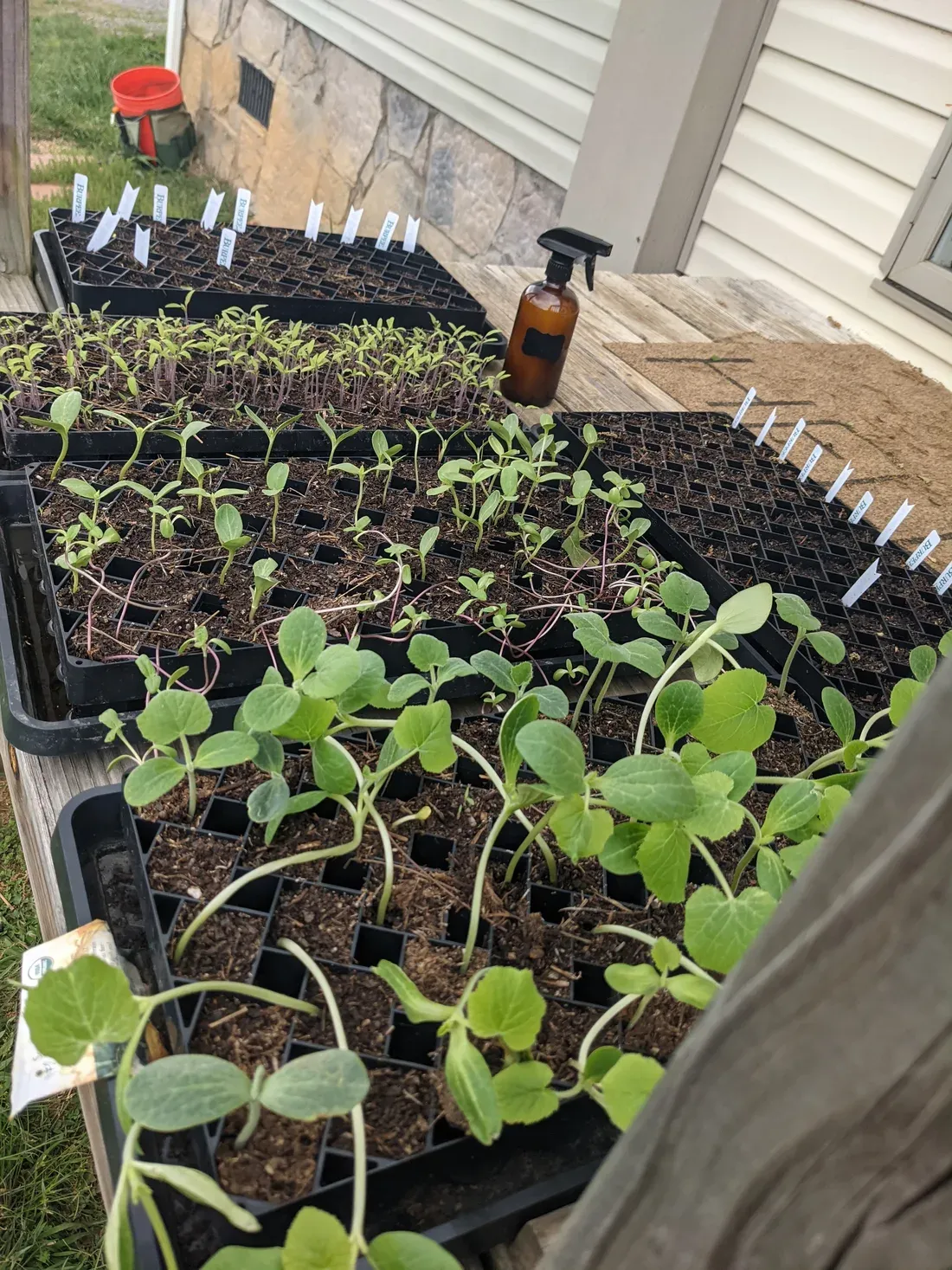
I have lost a lot more than that in one go. A whole flat of starts, left outside on a night the frost came early and I had not thought to check. Sixty tomato plants I had transplanted by hand, one at a time, gone. Those hurt in the way a bad week hurts.
The redwood was worse, and it was one seedling with three needles on it. Because there were more tomato seeds in the drawer and there was never going to be another honeymoon. That is the difference between a plant you can replace and a plant you cannot, and it is the entire reason this app exists.
An app cannot keep a tree alive. Nothing can promise you that. What it can do is make sure you are not the reason it died — that the frost warning reached you on the right night, that you knew the thing needed water on the day it needed water, that a plant you cannot replace was never quietly forgotten among two hundred you can.
What I have actually grown
Close to ten years now. Some years casual, some years all-in. The biggest was a 60 by 80 plot; the smallest was one seedling on a windowsill that I have already told you about.
Dozens and dozens of fruit trees — bare root, established ones from a nursery, and an orange tree I grew from a seed. I have worked ground with a tractor and I have worked it with my hands.
For a stretch in Tennessee it was a working homestead: 150 hens, more than ten goats, a cow, and dozens of ducks, geese and rabbits. That is a different kind of gardening. It changes what you plant and it changes who eats it.
And I have tried most of the methods people argue about online, usually because the last one had not worked:
- Back to Eden mulch.
- Potatoes three ways — grown in hay, in a potato tower, and in deep beds.
- No-till against till.
- In-ground against raised beds.
- Dense planting against sparse.
- Neat rows of corn, beans and squash against just putting things where they fit.
I am not going to tell you which one won, because the honest answer is that it depended on where I was standing.
Four states, four completely different problems
This is the part that convinced me most gardening advice is written as though everyone lives in the same place.
| Where | What the soil is like |
|---|---|
| East Tennessee | Hard clay. Plus armies of cicadas, June bugs and Japanese beetles that show up on their own schedule and do not care about yours. |
| Oregon | Soft, and wet more or less always. |
| California | Plain dead. Not poor — dead. |
| Wasatch Front, Utah | Close to perfect, which took me a while to trust. |
Same person, same seeds, same effort. Four different answers to "when do I plant this" and four different reasons things died. A planting calendar built for the average of those four is wrong in all four places, which is why this site computes your frost dates for your own patch of ground rather than the nearest airport.
What I am not
I am not a Master Gardener. I have no horticulture degree and no certificate on a wall, and you are not going to find one implied anywhere on this site. What I have is ten years of doing it, in four climates, and a fairly long list of things I have killed.
That is worth something, and it is not worth what a university extension bulletin is worth. So the growing advice here does not rest on my experience. Most values on a plant page cite the publication they came from — mostly land-grant extension services, the same people your county agent would point you at. The rest, about one in 7, are our own estimate, and the quick facts at the top of each plant page mark those “est”. When we get one wrong, the correction is published rather than quietly swapped out.
My experience decides what gets built and which problems are worth solving. It does not decide what temperature your peppers stop setting fruit at. Here is exactly how that works, including our own error count.
Why an app, and not another blog
The frost that took that flat was one I forgot to check. That is the whole thing.
It was not that I did not know what frost does to a tray of seedlings. Everybody who gardens knows that, and there are ten thousand articles about it. It was that nothing anywhere connected what was sitting outside to what the night was about to do. Both halves of that existed. Nothing put them together, because putting them together was a person's job, and a person has an evening.
That is a software problem, not an advice problem, and no amount of good writing fixes it. So GardenTrack is being built to hold what you planted, where you put it and when, and to say the thing you need on the day you need it — with the plants you cannot replace treated like they matter more, because they do. The free app is open now. The free tools on this site work today, no signup.
FAQ
Who writes GardenTrack?
One person: Nik Crawley, who built it. There is no content team and no rotating cast of freelancers — every byline on the site is his, because one person is accountable for all of it.
Is Nik a Master Gardener or a horticulturalist?
No. He has grown food for close to ten years in four states, kept livestock, planted dozens of fruit trees and killed plenty of plants — that is experience, not a certificate, and the difference matters. The growing advice on this site does not rest on his say-so. It is sourced field by field from university extension services and every value is traceable, which is what the how-we-research page is for.
Why should I trust the numbers on this site?
Not because of who wrote them. Most values on a plant page cite the publication they came from. The rest, about one in 7, are our own estimate, and the quick facts at the top of each plant page mark those “est”. Every batch of data gets checked against its sources before it merges, and we publish what those checks find, including the times we got it wrong, and the fields we do not have at all.
What is GardenTrack?
A garden app that remembers your garden so you don’t have to: what you planted, where and when, and what it needs next. It runs in your phone’s browser at app.gardentrack.app, and it’s free to start. The tools on this site are free too.
You can find me on LinkedIn. If something on this site is wrong, tell me — corrections go on the record and the page changes.
If you’d like to try it, Start free. If you just want the free stuff, the frost date lookup and the rest of the tools are there now, and the plant database is free to read.