

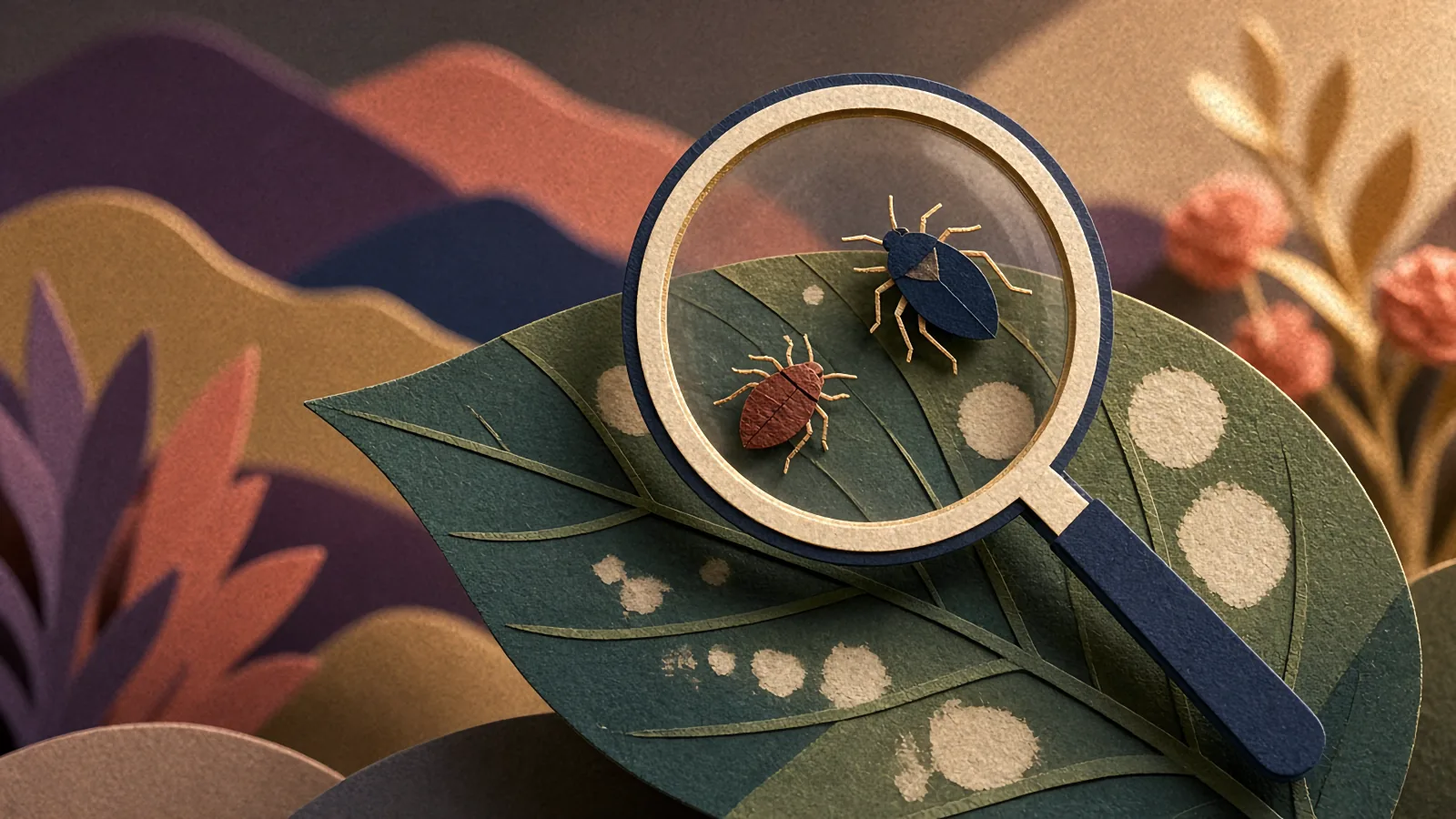
A hornworm is a green caterpillar up to four inches long with a horn on its rear end. It can strip a tomato plant in days. Pick it off by hand. But if it's carrying rows of white rice-like cocoons on its back, leave it alone. That one is already dying, and it is making the wasps that will hunt the rest. Leave it where it is.
The one you must not kill
Start here, because this is the mistake that costs people the most and it takes ten seconds to avoid.
If the hornworm you've found is covered in rows of small white things that look like grains of rice standing on end, don't squash it. Those aren't eggs the hornworm laid. They're the cocoons of a braconid wasp that has already parasitized it. The wasp larvae fed inside that caterpillar, and it's going to die whatever you do.
University of Wisconsin Horticulture is blunt about it: "If you see parasitized hornworms on your tomatoes, do not remove them. They will produce more wasps that can lay eggs on and kill other hornworms."
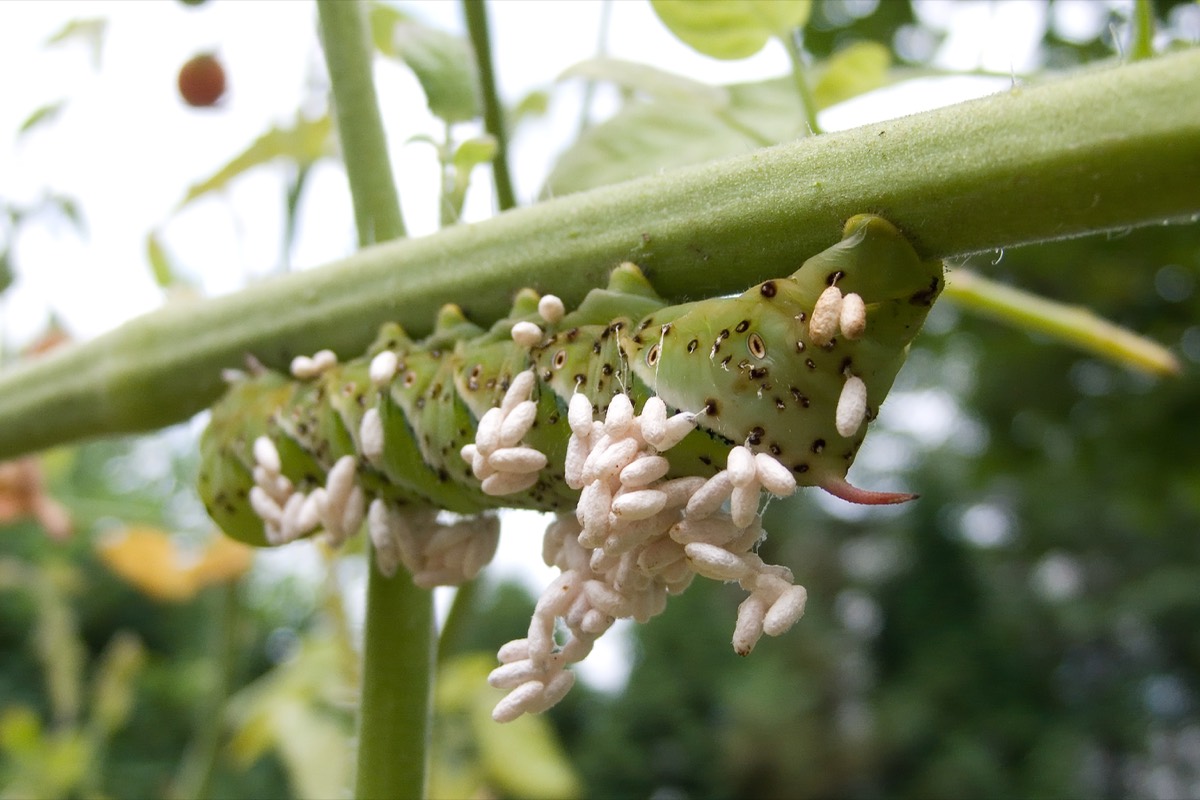
So the one that looks worst is the one to protect. Kill it and you've removed one hornworm. Leave it and you get a hatch of wasps that go looking for the ones you haven't found yet — and hornworms are very hard to find, which is the next problem.
Look for the droppings, not the caterpillar
A four-inch caterpillar sounds impossible to miss. It's not. Penn State Extension puts it simply: hornworms "easily blend in with the plant." They're the exact green of a tomato leaf, they sit still along the stems, and gardeners routinely stare straight at one without seeing it.
Don't hunt the caterpillar. Hunt what falls out of it. Penn State describes the droppings as "dark brown/black" and "large enough to be seen in plain sight," shaped like "flower- or star-shaped segments." They land on the leaves below and on the soil. Find a pile of them, then look straight up — it'll be within a foot or two.
And check the color. It tells you how hard to look. Penn State again: "if the pellets are green, they are fresh, and the hornworm recently deposited them. Blackened droppings mean they are somewhat older." Green pellets mean it's still up there right now. Black ones mean it may have already moved on, or grown up and dropped off to pupate.
The second clue is where the damage is. Utah State University Extension notes hornworms "will begin consuming the upper leaves first, and slowly move downward to lower leaves." So a plant that's being eaten from the top down, with bare stems where leaves used to be, is a hornworm plant. Something chewing your lowest leaves is usually not.
They work fast. That is why people find them suddenly. Wisconsin puts the appetite at "up to four times their weight in leaves and fruit each day." A plant can look fine on Sunday and be half stripped by Wednesday. That is the whole problem with looking for the caterpillar.
Which hornworm is it, and does it matter?
There are two species, they both eat tomatoes, and both get called tomato hornworms in conversation. The tell is the horn on the back end, and it takes one glance.
| What to look at | Tomato hornworm | Tobacco hornworm |
|---|---|---|
| The horn on the rear end | Black, or dark blue | Orange-red |
| The markings along each side | Eight white V shapes | Seven diagonal white stripes |
| What you should do about it | Exactly the same | Exactly the same |
Why we're telling you anyway
Because you'll look it up, find two names, and wonder whether you have the wrong page. You don't. Both feed on tomato, both reach around four inches, both get parasitized by the same wasps. You treat them identically. So no, it does not matter which one you have.
Worth thirty seconds of curiosity. No anxiety at all. If somebody tells you it matters for control, it doesn't.
What to do, in order
Most gardens never need to go past step three.
- Check the back for white cocoons first. Before you touch it, look for rows of small white rice-shaped cocoons standing up off its back. If they're there, put it back and leave it alone. That caterpillar is already finished and is making wasps that will hunt the others.
- Pick the rest off by hand. They don't bite and they don't sting. The horn is soft and harmless despite looking like it shouldn't be. Grip it behind the head and pull it off the stem. They hang on hard, so it takes a firm tug. Then drop it in soapy water. That is the whole method. Drop it in a tub of soapy water, or feed it to chickens if you have them.
- Find the ones you missed by following the droppings. Scan the leaves and soil under the plant for piles of large dark pellets, then look directly above each pile. Do this every couple of days for a week after you find the first one. Where there's one there are usually more. They grow fast enough that a small one you miss is a big one by the weekend.
- Decide whether it's actually a problem. UC Integrated Pest Management sets the bar plainly: treat hornworms only if they're causing extensive foliage damage, or if they're feeding on the fruit. A couple of caterpillars on a big healthy plant isn't an emergency. A tomato can lose a surprising amount of leaf without losing you any fruit. Leaves are cheap. Fruit is not.
- If you do spray, use the one that only hits caterpillars. Bacillus thuringiensis subspecies kurstaki, sold as Bt, is a bacterium that affects caterpillars and leaves wasps and bees alone. Spinosad also works. Both need to hit the caterpillar while it's small. UC IPM says Bt is most effective against newly hatched larvae and that timing is essential. It says the same about spinosad, adding that coverage has to be thorough. On a hornworm that's already four inches long, your hand is more effective than either.
- Turn the soil at the end of the season. Hornworms spend the winter in the soil beneath the plants they fed on. University of Wisconsin Horticulture reports that tilling "can kill up to 90% of larvae." So turn that bed over when you pull the plants. It is the cheapest control available, and the only one that works on next year rather than this one.
One reason to go easy on sprays here: UC IPM advises conserving natural enemies by not treating with disruptive pesticides, especially early in the season before fruit begins to mature. The wasps that parasitize hornworms are doing free work, and a broad-spectrum insecticide kills them too.
Bare stems, and whether the plant recovers
Hornworm damage looks worse than most pest damage because it's not nibbling. Whole leaves vanish and you're left with bare stems, often at the top of the plant where you notice it most.
If the leaves are also yellowing rather than simply gone, that's a different problem sitting on top of this one — yellow tomato leaves walks through the five causes and how to separate them.
The plant usually copes. A tomato in mid-season has more leaf than it strictly needs, and the ones that keep fruiting after a hornworm are common. What matters more is whether they got onto the fruit. Wisconsin notes hornworm-damaged fruit "often decay on the vine before harvest, or they may not rot but end up with dry feeding scars." Feeding on fruit is the point at which this stops being cosmetic.
For what this crop wants when nothing is eating it, our tomato plant page has the growing conditions, and the frost date lookup tells you how much season you have left to bother fighting for.
The other cost is sunscald. A tomato that suddenly loses its upper canopy in July has fruit exposed to direct sun that was shaded a week ago, and that fruit can scald. If a plant has been stripped badly at the top, some light shade cloth for a couple of weeks is worth more than anything you spray.
Where they come from, so this makes sense next year
The caterpillar is the larva of a big sphinx moth that flies at dusk — heavy-bodied, fast, and often taken for something other than a moth when it hovers at flowers. She lays single spherical eggs on the leaves, about a millimeter and a half across and white to pale green, usually on the undersides.
Utah State reports larvae reach full size "within 3-4 weeks" and that there are one or two generations a year in Utah. In warmer states there can be more. That short larval window is why a plant goes from untouched to stripped so quickly. It is also why a spray aimed at big caterpillars is mostly wasted — by the time they're the size you notice, they have already done most of the eating they were going to do.
Questions about hornworms
What are the white things on my tomato hornworm?
They're braconid wasp cocoons, and they mean the hornworm is already dying. A parasitic wasp laid eggs in the caterpillar, the larvae fed inside it, and they have emerged to pupate on its back. University of Wisconsin Horticulture says explicitly not to remove parasitized hornworms, because they will produce more wasps that go on to kill other hornworms. Leave that one where it is — it's the most useful caterpillar in your garden.
How do I find tomato hornworms?
Don't look for the caterpillar, look for its droppings. Hornworms leave large dark pellets on the leaves below them and on the soil, and those are far easier to spot than a green caterpillar on a green stem. Find the droppings, then look directly above them. Damage that starts at the top of the plant and works down is another hornworm sign, because that's the order they feed in.
Do tomato hornworms bite or sting?
No. The horn on the rear end looks like a stinger and isn't one — it's soft and completely harmless. You can pick them off with bare hands. They grip the stem hard, so it takes a deliberate tug rather than a gentle pull.
What's the difference between a tomato hornworm and a tobacco hornworm?
The horn. A tomato hornworm has a black or dark blue horn and eight white V-shaped markings along each side. A tobacco hornworm has an orange-red horn and seven diagonal white stripes. Both feed on tomato plants, both reach about four inches, and both are dealt with in exactly the same way, so the difference is interesting rather than useful.
What kills tomato hornworms?
Your hand, mostly. On a caterpillar that's already large, hand-picking beats any spray. If you do want a spray, Bacillus thuringiensis subspecies kurstaki (Bt) and spinosad both work. Both are far more effective on newly hatched larvae than on big ones — UC Integrated Pest Management stresses that timing is essential for Bt and that spinosad needs thorough coverage. UC IPM also advises treating only if hornworms are causing extensive foliage damage or feeding on the fruit.
Will my tomato plant recover from hornworm damage?
Usually yes. A mid-season tomato carries more leaf than it needs, and plants routinely keep fruiting after losing a lot of foliage. The two things that change that answer are hornworms feeding on the fruit itself, which causes decay on the vine or dry feeding scars, and sunscald on fruit that has suddenly lost the canopy shading it. If a plant has been stripped at the top in high summer, shade is worth more than any treatment.
How do I stop hornworms coming back next year?
Turn the soil over in that bed after you pull the plants. Hornworms overwinter in the ground beneath where they fed, and University of Wisconsin Horticulture reports that tilling "can kill up to 90% of larvae". It's the cheapest control available and the only one that works on next season instead of this one.
Sources
Every planting date, depth, and temperature on this page traces to these university extension guides. Where they differ, the ranges above hold the whole spread.
- University of Wisconsin–Madison Division of Extension — Hornworms
- Utah State University Extension — Tomato and Tobacco Hornworms
- Penn State Extension — Evidence of Tobacco and Tomato Hornworm on Tomatoes
- University of California Statewide Integrated Pest Management Program — Hornworms — Tomato
GardenTrack records what happened in each bed and when, so next August you can see that this bed had hornworms in the first week of the month last year — which is exactly when it's worth starting to look for droppings rather than waiting to notice bare stems.