By Nik Crawley, founder of GardenTrack · Updated July 17, 2026
✓ In your garden
Cherokee Purple is a big, dusky rose-purple beefsteak tomato — an heirloom that's been passed down by seed for about a hundred years. It grows on a tall vine, ripens in roughly 70–85 days, and it's ugly as homemade sin and just about the best-tasting tomato you'll grow. Give it a tall cage and keep the water steady.
it's yours — saved right here, no account
two ripe Cherokee Purple fruit, showing the dusky red-purple skin and the green shoulders that mark the variety · Photo: Dave Whitinger
(CC BY-SA 3.0, via Wikimedia Commons)
· source
IndeterminateHeirloomNightshade
“Ugly, crack-prone, and the best tomato most people ever eat.”
Days to first ripe70–85 daysmid-season
Plant6–8 ft tall vinesprawls — stake or cage it tall
Fruit~8–14 oz beefsteakcan top a pound
FlavorLegendary 5/5
Widely called one of the best-tasting heirlooms there is — rich, smoky, old-fashioned.
Easy to growSo-so 3/5
Friendly for an heirloom, but it's a tall, hungry, thirsty indeterminate that wants attention.
Disease resistanceLow — manage it 2/5
An old heirloom with no built-in disease resistance, and the experts split (Arkansas "relatively tolerant" vs NC State "little resistance"). Give it airflow and mulch.
Crack resistanceSplits in wet spells 2/5
Cracks with moisture swings; keep the water even and mulch.
How well it storesEat it now 1/5
Soft and juicy — it doesn't ship. A lousy grocery tomato, which is exactly why it's a great garden one.
That's the trade-off for a classic heirloom — the flavor up top is why it's worth it.
RichSweet-smokyLow-acidComplex
✓ Worth the trouble~ Needs a tall support, early✗ Not for pots or sauce
Numbers from university growing guides. Ratings are our take, judged against all tomatoes. Tap a meter to see why.
Growing basics — shared by every tomato
Cherokee Purple grows like any other tomato. The full picture — how deep to plant, spacing, feeding, pests, harvest — lives on the Tomato page so it's maintained in one place.
It ripens with its shoulders still green — don't wait for red, you'll wait forever. Pick when the body's gone that dusky rose-purple and it gives a little to a gentle squeeze.
The stages: Green → Starting to turn → Dusky → Pick it. Grab it at that last stage.
How big is a Cherokee Purple tomato?
Cherry tomato1″
Baseball2.9″
Cherokee Purple3.5″
A big beefsteak — about a softball, ~8–14 oz (can top a pound).
Bush or vine? Cherokee Purple's size & support
6 ft4 ft2 ft6–8 ft
Grows as
A tall vine that keeps growing all season (indeterminate)
Height & support
Tall — plan for 6–8 ft of cage or stake
Trimming
Optional: snip off the little side sprouts (called “suckers”) for a tidier plant
Picking
A few at a time, right up to the first frost
Our take for a vine like this — the real height depends on your soil and summer.
What is Cherokee Purple good for?
✓Fresh, off the vineThis is the whole point.Great
✓Slicing & sandwichesBig beefsteak slices, one per bun.Great
✓SaladsJuicy and rich — cut just before serving.Great
✗Sauce & pasteToo soft and watery; you'd cook it down forever.Skip it
✗Canning & storingThin-skinned and soft — eat it within a day or two.Skip it
Our take, from how it grows and tastes — not every kitchen agrees.
Does it ripen all at once, or a bit at a time?
A little at a time. You pick a few every few days, from the first ripe one until frost.
A plant like this keeps making new fruit for weeks, so you pick a few at a time. Plan your kitchen around it.
Greenhouse or cover on: your start slides ~4 weeks earlier and your harvest stretches ~3 weeks later (shown striped).
Planting seeds straight in the ground only works where the season's long and warm — most gardeners start seeds indoors or buy young plants, or you'd pick your first tomato right as frost hits.
Comfortable — first ripe fruit lands around early Jul, well before your typical frost (~late Oct).
Start seeds indoors
mid Feb – early Mar
Toughen up outside
mid Apr – late Apr
Move plants outside
late Apr – early May
Growing
early May – early Jul
Picking
early Jul until frost (~late Oct)
Typical dates for zone 6b — set your zone or ZIP above for yours.
What to plant near Cherokee Purple — and what to keep away
✓ Good neighbors
BasilTrialed
Basil can cut thrips numbers on tomatoes, and a modest yield gain shows up when it is planted at good density. They also want the same heat and water, so the bed suits both.
French marigoldTrialed
Grown thick and turned into the soil, they suppress root-knot nematodes. A couple between plants mostly just look nice.
Sweet alyssumTrialed
Its flowers feed hoverflies, and hoverfly larvae eat aphids. Commercial lettuce growers interplant it for that exact job.
LettucePractical
A tall tomato throws exactly the shade lettuce wants once summer heat makes it flower and turn bitter (bolt).
CarrotsTraditional
'Carrots Love Tomatoes' is a book title, not a trial. They coexist fine — just expect the tomato to shade them by August.
Onions & garlicTraditional
Chart canon says onions and garlic make good tomato neighbors. No trials to point at, no conflict either.
✗ Keep apart
Black walnutPractical
Walnut roots release juglone, and tomatoes are on every sensitivity list. Keep beds well clear of the canopy.
FennelPractical
Fennel foliage and seed are rich in trans-anethole, and extracts of them held back germination and seedling growth across a range of species in testing. Whole-plant effects at garden spacing are milder than the "fennel kills everything" reputation, but the chemistry is real — give it its own pot.
PotatoesPractical
Same family, same late blight. One sick bed infects the other.
Sweet cornPractical
Corn earworm and tomato fruitworm are the same moth. Side by side, you're setting its table twice.
Cabbage familyTraditional
Flagged on the classic charts, mechanism murky. Skip the pairing if you've got the space.
The badge is the honesty.Trialed = a published field trial · Practical = a real mechanism · Traditional = companion-chart lore. These pairings hold for every tomato.
Pairings compiled from University of Minnesota Extension, USDA Agricultural Research Service (Salinas, CA), West Virginia University Extension, Penn State Extension, El-Kenany & El-Darier.
Growing Cherokee Purple — the things that trip people up
Ripe while the shoulders stay green — pick when the whole fruit's gone dusky rose-purple and gives a little to a squeeze. It never turns fully red; waiting for red means picking it mushy.
Soft and juicy, so it splits after a heavy rain or a watering swing. Keep the soil evenly moist and mulch — feast-or-famine water is what cracks it.
An heirloom with no formal disease resistance. Give it airflow, mulch, and water at the soil not the leaves, and it rewards you with the flavor.
From university growing guides (see Sources).
Where Cherokee Purple comes from
Nobody knows exactly where it started, and that's half the charm. The story that came with the seeds: a family in eastern Tennessee had grown this tomato for about a hundred years, and said it traced back to the Cherokee.
In 1990 a tomato obsessive named Craig LeHoullier got a handful of seeds in the mail from a man in Sevierville, Tennessee — Dolly Parton's hometown, up in the Smoky Mountains — grew them out, and named the dusky fruit Cherokee Purple. Southern Exposure Seed Exchange started selling it in 1993, and it went from a shoebox of saved seed to the heirloom everybody knows.
It's an old tomato with a real paper trail — the University of Arkansas extension figures it "probably began in the Tennessee River Valley in the 19th century."
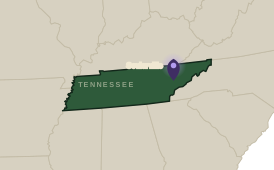
Sevierville sits in the far east of Tennessee, tucked against the Great Smoky Mountains — Dolly Parton country, and the tomato's home turf.
What it tastes like — and what it's for
This is the reason to grow it. The flavor is the thing people mean when they say old tomatoes tasted better: sweet and rich with a smoky, almost savory edge, and so juicy that Texas A&M's master gardeners compare a ripe one to a peach.
It's a slicer. Thick slabs on a sandwich, a plate with salt and olive oil, that kind of thing — not a sauce tomato. It won't ship and you'll never see it in a grocery store, which is exactly the point of growing your own.
Growing Cherokee Purple
Grow it like any tomato — full sun, steady water, feed it — with two things to know.
One, it's indeterminate, so it's a vine, not a bush. It'll run 4 to 6 feet and keep making new tomatoes right up to frost, so give it a tall cage or a stake at planting, not later. Two, the fruit is big — commonly 8 to 14 ounces, and it can top a pound — so that support isn't optional; a loaded branch will snap without it.
Space plants a couple of feet apart, and don't rush it into cold ground — Cherokee Purple sulks below about 43°F and takes damage. Set your zone on the tomato page and the calendar pins your start-and-plant-out dates.
It's an heirloom, so there's no formal disease-resistance package — and the experts don't even agree on it: Arkansas calls it a "relatively disease resistant line" that's tough in mid-South heat and humidity, while NC State found it "has little disease resistance." Bottom line: grow it with normal tomato habits — airflow, mulch, water at the soil not the leaves — and don't lean on a resistance label.
field tomatoes staked and tied — the kind of tall support an indeterminate vine like this needs · Photo: Dwight Sipler
(CC BY 2.0, via Wikimedia Commons)
· source
When is it ripe? (why the top stays green)
Here's the one that gets everybody. A ripe Cherokee Purple does not turn fully red. The shoulders around the stem stay green — sometimes almost olive — even when the rest has gone a deep, dusky purple-brown.
If you wait for it to go all-red, you'll wait forever and end up picking it overripe and mushy. Go by color and feel instead: when the body has turned that dusky rose-purple and it gives slightly to a gentle squeeze, it's ready. The green shoulder is the variety, not a problem to fix.
When and how to harvest tomatoes · Kellogg Garden
What goes wrong — and the fixes
Two quirks worth knowing before they surprise you.
Cracking. It's a soft, juicy tomato, which is wonderful to eat and prone to splitting after a heavy rain or a watering swing. The fix is boring and it works: keep the soil evenly moist. Mulch, and water deep and regular instead of feast-or-famine.
Ugly early fruit. The first tomatoes of the season often come out lumpy or scarred on the bottom — that's cat-facing, and the Arkansas extension notes it's common in early-season fruit. It's cosmetic. Cut around it, and the later fruit cleans up as the weather warms.
Cherokee Purple vs Brandywine
If you're stuck choosing between the two famous flavor heirlooms: Brandywine is the pink one everyone name-drops, but it's fussier and lower-yielding. Cherokee Purple gives you most of that legendary flavor with a lot less drama — it sets more fruit, shrugs off Southern heat better, and comes in a little earlier.
If this is your first heirloom, start with Cherokee Purple. Grow the Brandywine the year you're ready to fuss.
Cherokee Purple tomato at a glance
Cherokee Purple Tomato — at a glance
Type
Beefsteak (big slicing tomato)
Days to ripe
80 days after you plant it outside
Color
Purple
Best for
Thick slices for sandwiches
Extra fields from seed-catalog listings and university growing guides. Days to ripe and disease resistance shift with your climate and seed source — double-check with your local extension office before you buy.
Watch: growing Cherokee Purple
Growing Cherokee Purple, start to finish · Gardening Tales With JulesThe complete guide to growing tomatoes · MIgardener
Embedded from their creators on YouTube — full credit and views go to the channel.
Add Cherokee Purple to your garden
Save it and the plant lights up — kept right here in your browser, no account needed. It's the first thing GardenTrack starts remembering for you.
Plants you add here are saved in this browser. When you’re ready, you can take them into GardenTrack’s free app, and it tells you what to do and when.
Common questions about Cherokee Purple
Is Cherokee Purple determinate or indeterminate?
Indeterminate — a vine that keeps growing and making new tomatoes until frost, reaching 4–6 feet. It needs a tall cage or stake, put in at planting, to hold up the heavy fruit.
Why are the shoulders still green when it's ripe?
That's the variety, not a problem. Cherokee Purple ripens to a dusky rose-purple but keeps green shoulders near the stem even when fully ripe. Judge ripeness by the overall dusky color and a slight give to the squeeze, not by waiting for full red.
How long does Cherokee Purple take to grow?
Roughly 70–85 days from transplant to the first ripe fruit — a mid-to-late-season tomato. In short-season/northern zones, start seeds indoors 6–8 weeks before your last frost so it has time to ripen.
Is Cherokee Purple hard to grow?
No — for an heirloom it's forgiving. It handles heat and humidity well and is fairly disease-tolerant. The two things that matter are a strong support for the heavy fruit and even watering to keep it from cracking.