By Nik Crawley, founder of GardenTrack · Updated July 22, 2026
✓ In your garden
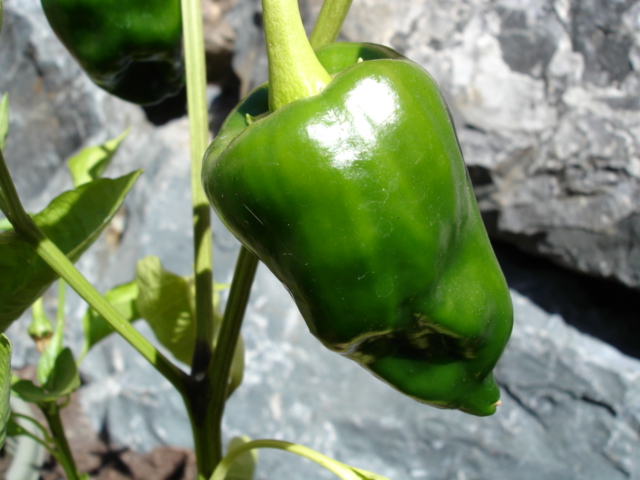
The poblano is the big, mild, thick-walled chile behind chiles rellenos — heart-shaped, dark green, and genuinely gentle at 1,000–2,000 Scoville units (milder than a jalapeño). It's grown to be roasted and peeled, stuffed, or dropped into salsa and mole. Leave the pods to ripen deep red and dry them and you've made ancho, one of the foundation chiles of Mexican cooking.
it's yours — saved right here, no account
a dark-green poblano ripening on the plant — the broad-shouldered, tapering heart shape typical of the variety · Photo: stef yau
(CC BY 2.0, via Wikimedia Commons)
· source
Mild heatChileNightshade
“A big, mild, thick-walled chile built for roasting and stuffing — and the dried ancho behind half of Mexican cooking.”
Heat1,000–2,000 SHUgenuinely mild
Days to first pick65–75 daysgreen; +3–4 wk for red/ancho
Plant2–2.5 ft bushdensely branched
Fruit~4 in heart-shapethick-walled
Easy to growDependable 4/5
A vigorous, productive warm-season chile that ripens earlier than the superhots and crops heavily — a forgiving pick.
HeatMild 1/5
1,000–2,000 SHU — 2–8× milder than a jalapeño. Most pods give a soft, warm background heat rather than a bite; the ripe red/ancho stage runs a touch hotter.
Heat surprisesThe odd hot one 3/5
Usually mild, but a stressed plant throws the occasional pod with real kick — worth a taste before you load a dish.
Best eaten cookedRoast it 3/5
The thick skin is tough raw; charring and peeling is the signature move that unlocks the flavor.
An easy, generous chile — just plan to roast it rather than eat it raw.
EarthyRichGrassy-greenMild
✓ The roasting & rellenos chile~ Best charred and peeled, not raw✗ Not for heat-seekers
Numbers from university growing guides. Ratings are our take, judged against all peppers. Tap a meter to see why.
Growing basics — shared by every pepper
Poblano grows like any other pepper. The full picture — how deep to plant, spacing, feeding, pests, harvest — lives on the Pepper page so it's maintained in one place.
Poblanos are picked and eaten dark green — that's the fresh, everyday stage for rellenos and roasting. Left on the plant they ripen to a deep brick red that darkens further; the ripe red pod is usually dried into ancho rather than eaten fresh, and it runs a bit hotter and sweeter than the green.
The stages: Dark green → Turning → Brick red → Deep red. Grab it at that last stage.
Greenhouse or cover on: your start slides ~4 weeks earlier and your harvest stretches ~3 weeks later (shown striped).
Planting seeds straight in the ground only works where the season's long and warm — most gardeners start seeds indoors or buy young plants, or you'd pick your first tomato right as frost hits.
Comfortable — first ripe fruit lands around early Jul, well before your typical frost (~late Oct).
Start seeds indoors
early Feb – early Mar
Toughen up outside
late Apr – early May
Move plants outside
early May – early May
Growing
early May – early Jul
Picking
early Jul until frost (~late Oct)
Typical dates for zone 6b — set your zone or ZIP above for yours.
What to plant near Poblano — and what to keep away
✓ Good neighbors
BasilTraditional
Same bed conditions, same kitchen destiny.
✗ Keep apart
The badge is the honesty.Trialed = a published field trial · Practical = a real mechanism · Traditional = companion-chart lore. These pairings hold for every pepper.
Pairings compiled from West Virginia University Extension.
Growing Poblano — the things that trip people up
Pick it dark green and glossy for the classic fresh use — rellenos, rajas, roasting. Left to ripen it turns deep red; those red pods are what get dried into ancho, and they're a little hotter and richer than the green.
It's genuinely mild — a soft, warm background heat, not a bite — but a stressed plant will throw the occasional surprisingly hot pod, so taste one before you build a whole dish around it.
The thick skin is tough raw. Char it black over a flame or under a broiler, steam it in a covered bowl, and peel — that roasting step is the poblano's whole point.
From university growing guides (see Sources).
Where the poblano comes from
The poblano takes its name from Puebla in central Mexico, where it's been grown for centuries and is tied to the cooking around the city of Cholula. Like all Capsicum annuum chiles it was domesticated in Mesoamerica long before the Spanish arrived, and it remains one of the most popular peppers grown in Mexico.
It leads a double life. Fresh and green, it's the pepper for chiles rellenos. Ripened red and dried, it becomes the 'ancho' — Spanish for 'wide,' after its broad, flat, heart-shaped pod — one of the foundation chiles of moles and adobos.
How hot is a poblano?
Genuinely mild — this is a chile you can build a dish around without scaring anyone off. At 1,000 to 2,000 Scoville units it's noticeably gentler than a jalapeño (2,500–8,000), roughly 2 to 8 times milder, and far above a sweet bell (0). Most pods deliver a soft, warm background heat rather than a real bite.
The two honest caveats: a stressed plant occasionally throws a pod with surprising kick, so taste before you commit; and the fully ripe red pod (and the ancho it becomes) runs a bit hotter and richer than the green.
Growing poblanos
Grow it like any pepper — full sun, warm soil, steady water — with the bonus that it's one of the easier, earlier, heavier-cropping chiles. It forms a densely branched 2–2.5 ft bush that sets a generous load of pods and comes in ahead of the slow superhots.
It's frost-tender, so wait for warm soil and settled nights before transplanting. Even moisture keeps the big pods filling out and the heat from spiking. Set your zone on the pepper page and the calendar pins your start-and-plant-out dates.
Roasting: the poblano's whole point
Don't eat a poblano raw and judge it — the thick skin is tough and the flavor is locked up until you char it. Blister the pod black all over (a gas flame, a grill, or a broiler), then sweat it in a covered bowl or bag for ten minutes and slip the skin off.
What's left is silky, smoky, and savory-sweet: the base for chiles rellenos (stuffed with cheese and fried), rajas (strips with cream), or chopped into salsa and mole. That single roasting step is the difference between 'meh' and the reason people grow poblanos.
Green poblano, dried ancho
Here's the naming twist that trips people up: the same pepper has two names depending on when you pick it and what you do with it. Green and fresh, it's a poblano. Left to ripen deep red and then dried, it becomes an 'ancho' — the wrinkled, dark, raisin-scented chile that's a backbone of moles, adobos, and ancho powder.
So if a recipe calls for ancho, it's asking for a dried, ripe poblano. Grow a few plants and you can do both: pick most pods green for the kitchen, and let a handful ripen red to dry for winter.
a dried poblano — this is an 'ancho,' the wrinkled dark chile the ripe red pod becomes when dried · Photo: Carstor
(CC BY-SA 2.5, via Wikimedia Commons)
· source
What goes wrong — and the fixes
The occasional too-hot pod. Poblanos are mild by nature, but drought and heat stress push individual pods hotter than expected. Keep the water even, and taste before you serve a crowd.
Slow, sulking start. Like all peppers it stalls in cold soil, so don't transplant early. And if you're drying for ancho, remember the red-ripe stage takes several extra weeks on the plant — plan the season for it.
Poblano pepper at a glance
Poblano Pepper — at a glance
Type
Poblano
Days to ripe
65–75 days after you plant it outside
Color
Green, Red
Fruit size
Medium
Extra fields from seed-catalog listings and university growing guides. Days to ripe and disease resistance shift with your climate and seed source — double-check with your local extension office before you buy.
Watch: growing Poblano
How to grow peppers — complete growing guide · MIgardenerWatch this before growing peppers · Epic Gardening
Embedded from their creators on YouTube — full credit and views go to the channel.
Add Poblano to your garden
Save it and the plant lights up — kept right here in your browser, no account needed. It's the first thing GardenTrack starts remembering for you.
Plants you add here are saved in this browser. When you’re ready, you can take them into GardenTrack’s free app, and it tells you what to do and when.
Common questions about Poblano
How hot is a poblano?
Mild — about 1,000–2,000 Scoville heat units, roughly 2 to 8 times milder than a jalapeño and far above a sweet bell (0). Most pods give a gentle, warm background heat, though a stressed plant can throw the occasional hotter one, and the ripe red/ancho stage runs a bit hotter.
What's the difference between a poblano and an ancho?
They're the same pepper at different stages. A poblano is the fresh green (or ripe red) pod; an 'ancho' is the fully ripe red poblano after it's been dried. So a recipe calling for ancho wants a dried, ripe poblano.
Do you have to roast poblanos?
For most uses, yes — the thick skin is tough and the flavor stays locked up until you char and peel it. Blister the pod black over a flame or broiler, steam it covered for ten minutes, then slip off the skin. That step is what makes it good for rellenos, rajas, and salsa.
When do you pick poblano peppers?
Pick them dark green and glossy, at about 4 inches, for the classic fresh use — roughly 65–75 days from transplant. Leave some on the plant a few weeks longer to ripen deep red if you want to dry them into ancho.