By Nik Crawley, founder of GardenTrack · Updated July 26, 2026
✓ In your garden
Red Pontiac is the tough, dependable red potato that anchors a lot of Southern and heavy-soil gardens — deep-red-skinned, white-fleshed, high-yielding, and forgiving enough that it's a great first potato. It genuinely tolerates hot summers and heavy clay that stunt finickier varieties. The honest trade-offs are about keeping and consistency: it stores a few months rather than all winter, and it's prone to hollow heart and knobby tubers if your watering swings between dry and soaked. In the kitchen it's a boil-and-roast waxy potato, not a fry-or-bake one.
it's yours — saved right here, no account
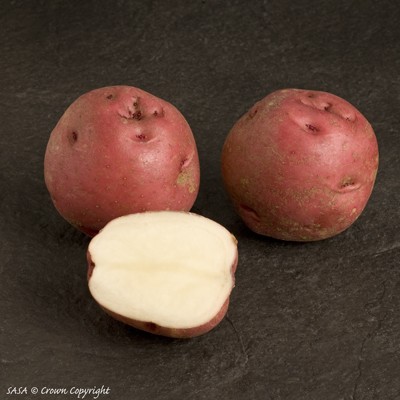
Two whole Red Pontiac potatoes and one cut half on slate — the deep-red skin and bright-white flesh that define the variety (genebank reference photo). Eyeball-verified against the red-skin/white-flesh trait. · Photo: Science and Advice for Scottish Agriculture (SASA)
(OGL v3.0, via Wikimedia Commons)
· source
Red potatoWhite flesh · waxyClay-tough
“A tough, high-yielding red potato built for hot summers and heavy soil — the reliable Southern-garden classic, with a fair storage life (a few months, not a full winter) and tubers that can turn knobby or hollow-hearted if watering swings wildly.”
Days to maturity80–100 days (mid-season)not a true early, despite common marketing
Skin / fleshdeep red skin, white fleshone of the most classic red potatoes; waxy
Soil tolerancegood in heavy clayone of the more forgiving varieties for compacted soil
Genuinely one of the better red potatoes for heavy or compacted soil — it shrugs off conditions that stunt thinner-skinned varieties — and it's consistently high-yielding and forgiving, sizing up generously under average care.
Kitchen (waxy uses)Boil & roast star 4/5
The moist, waxy white flesh holds its shape and turns creamy boiled, roasted, or steamed — a natural for potato salad and skin-on preparations, since the red skin looks great and rarely needs peeling.
A 3–5 month keeper — fine for fall and winter, but well short of a long-keeper like Kennebec — and prone to hollow heart and knobby second-growth tubers if watering swings between dry spells and heavy soaking, especially once tubers get large.
Frying / bakingWrong for fluffy jobs 2/5
The moist, waxy flesh doesn't fry or bake up light and fluffy the way a russet does — it makes a denser, gummier baked potato and doesn't crisp well for chips or fries.
The red potato to plant if your soil is heavy and your summers are hot — just keep the water even and eat it within a few months.
MildSlightly sweetWaxyMoistCreamy boiled
✓ Tough, high-yielding, clay-tolerant — a beginner's red~ Moderate keeper; hollow heart if watering swings✗ Not for fries, chips, or a fluffy baked potato
Numbers from university growing guides. Ratings are our take, judged against all potatoes. Tap a meter to see why.
Growing basics — shared by every potato
Red Pontiac grows like any other potato. The full picture — how deep to plant, spacing, feeding, pests, harvest — lives on the Potato page so it's maintained in one place.
Greenhouse or cover on: your start slides ~4 weeks earlier and your harvest stretches ~3 weeks later (shown striped).
Planting seeds straight in the ground only works where the season's long and warm — most gardeners start seeds indoors or buy young plants, or you'd pick your first tomato right as frost hits.
Comfortable — first ripe fruit lands around mid Jun, well before your typical frost (~late Oct).
Plant seeds outside
late Mar – early Apr
Growing
early Apr – mid Jun
Picking
mid Jun – mid Jul
Typical dates for zone 6b — set your zone or ZIP above for yours.
What to plant near Red Pontiac — and what to keep away
✓ Good neighbors
Cabbage familyTraditional
Old chart pairing.
✗ Keep apart
TomatoPractical
Same family, same late blight. One sick bed infects the other.
The badge is the honesty.Trialed = a published field trial · Practical = a real mechanism · Traditional = companion-chart lore. These pairings hold for every potato.
Pairings compiled from West Virginia University Extension.
Growing Red Pontiac — the things that trip people up
Plant it where other potatoes struggle. Red Pontiac is genuinely one of the better varieties for heavy clay and hot summers — it's the Southern-garden default for a reason. If your soil is compacted or your season runs hot, this is a forgiving, high-yielding choice.
Keep the water even. Its main weakness is hollow heart and knobby second-growth tubers, both driven by watering that swings between dry and soaked, especially as tubers get large. Aim for 1–2 inches a week and hill or mulch to buffer the swings; harvest before tubers get oversized.
Eat it within a few months. It's a moderate keeper (3–5 months cured), not a store-till-spring potato, so plan to use it through fall and winter. Set your zone on the [potato page](/plants/potato/) for planting dates.
From university growing guides (see Sources).
A red sport of the Pontiac potato
Red Pontiac arose as a natural red-skinned color mutation — a 'sport' — of the original Pontiac potato, itself a 1938-released cross of the Triumph and Katahdin varieties. The red sport was selected and introduced out of Florida in the 1940s and spread into a widely grown commercial and home-garden variety across the US, Canada, and beyond.
It has no All-America Selections award — it predates the home-garden AAS vegetable program and was never entered — and no single official 'release year' is consistently documented across sources, so we don't assign one. What's beyond dispute is its role: for decades it's been the red potato Southern and heavy-soil gardeners reach for first.
Deep-red skin, and genuinely tough
Red Pontiac is one of the most visually classic red potatoes — deep-red skin over bright-white flesh, in round-to-oval tubers with a thin skin. It's mid-season, about 80 to 100 days, so despite sometimes being marketed as 'early,' it's not a true early variety.
Its real distinction is toughness. It's reliable, high-yielding, and notably tolerant of heavy clay soil where finickier varieties struggle, and it's widely adapted across hot and humid climates — a longtime Southern garden staple for exactly that reason. If your soil is compacted or your summers run hot, this is the red potato most likely to shrug it off and still hand you a heavy harvest.
The honest quirks: eyes, keeping, and hollow heart
Garden lore calls Red Pontiac a deep-eyed nuisance to peel. The truth is muddier: extension and catalog sources genuinely disagree — some list the eyes as shallow and easy, others as deep-set. In practice they run shallow-to-medium on most tubers, with occasional deeper eyes on the largest ones. It's not the uniformly deep-eyed pain some lore claims, but don't expect russet-smooth skin either.
Two things are clearer. Storage is moderate — commonly cited at 3 to 5 months in good cool, dark, humid conditions, fine for using up over fall and winter but well short of a long-keeper like Kennebec, so don't count on it lasting to next spring's planting. And it's prone to hollow heart (a dark internal cavity) and knobby, second-growth tubers if watering swings between dry spells and heavy soaking, especially once tubers get large. Even, consistent moisture matters more with this variety than with some others.
Growing Red Pontiac
Figure roughly 80 to 100 days from planting (mid-season). Cut seed potatoes into egg-sized pieces with 1–2 eyes each, let the cut sides callus for a day or two, and plant when the soil hits about 45–50°F, spacing pieces 10–15 inches apart in rows 30–36 inches apart, in full sun. Hill soil around the stems as they grow to keep developing tubers covered and shaded so they don't green.
Water is the lever that matters most here: aim for about 1–2 inches a week and keep it even, because inconsistent watering is the main cause of this variety's hollow heart and knobby tubers. For new potatoes, dig 2–3 weeks after flowering; for storage, wait until the foliage yellows and dies back, then cure the tubers in a cool, dark spot for about two weeks before storing.
What goes wrong — and the fixes
Hollow heart (a dark cavity in the center of large tubers) and knobby second-growth are Red Pontiac's signature disorders, and both come from the same cause: uneven watering, especially a dry spell followed by heavy rain or irrigation during bulking. The fix is consistency — 1–2 inches of water a week, hill or mulch to buffer swings, and harvest before tubers get oversized. Scab (rough corky skin patches) shows up in soil that's too alkaline or too dry at tuber set, so hold pH around 5.0–6.0 and irrigate steadily for the first few weeks after tubers begin forming.
The pests and diseases are standard potato fare. Hand-pick Colorado potato beetles and their orange egg clusters off leaf undersides early, or use row cover until flowering. And watch for late blight in cool, wet, humid weather — space plants for airflow, avoid overhead watering late in the day, and remove infected foliage immediately, since Red Pontiac's blight resistance is only moderate.
In the kitchen
Red Pontiac is a waxy potato, and it plays to that. It's at its best boiled for potato salad, roasted whole or halved, steamed, or simmered in soups and stews where the tuber holds its shape instead of falling apart. Skin-on is the way to cook it — the red skin looks great and the thin skin doesn't need peeling for most dishes.
Where it's the wrong tool is anything that wants a floury potato. It won't fry or bake up light and fluffy: the moisture content and sugar levels don't crisp well for chips or fries, and the waxy texture makes a denser, gummier baked potato than a russet. For those jobs, reach for a Russet Burbank; for everything creamy and hold-together, Red Pontiac is the pick.
Red Pontiac potato at a glance
Red Pontiac Potato — at a glance
Type
Red
Days to ripe
90–120 days after you plant it outside
Color
Red
Extra fields from seed-catalog listings and university growing guides. Days to ripe and disease resistance shift with your climate and seed source — double-check with your local extension office before you buy.
Watch: growing Red Pontiac
Growing & Harvesting Red Pontiac Potatoes · SouthDown Farm
Embedded from their creators on YouTube — full credit and views go to the channel.
Add Red Pontiac to your garden
Save it and the plant lights up — kept right here in your browser, no account needed. It's the first thing GardenTrack starts remembering for you.
Plants you add here are saved in this browser. When you’re ready, you can take them into GardenTrack’s free app, and it tells you what to do and when.
Common questions about Red Pontiac
Is Red Pontiac a good potato for heavy clay soil?
Yes — it's one of the better choices for it. Red Pontiac is genuinely tolerant of heavy, compacted clay that stunts thinner-skinned varieties, which is a big reason it's a longtime Southern and heavy-soil garden staple. It's also high-yielding and forgiving of average care, making it a reliable choice for beginners or difficult ground.
How long does Red Pontiac store?
About 3 to 5 months in good cool, dark, humid storage — a moderate keeper. That's enough to use it up through fall and winter, but well short of a long-keeping variety like Kennebec, so don't count on it lasting until spring. Cure the tubers for about two weeks after harvest before storing, and it keeps best if you avoided hollow heart by watering evenly.
Does Red Pontiac really have deep eyes?
It's exaggerated. Sources genuinely disagree — some call the eyes shallow and easy to peel, others deep-set — and in practice they run shallow-to-medium on most tubers, with occasional deeper eyes on the biggest ones. It's not the uniformly deep-eyed nuisance some garden lore claims, though it's not russet-smooth either.
Why is my Red Pontiac hollow or knobby inside?
Uneven watering. Red Pontiac is prone to hollow heart (a dark internal cavity) and knobby second-growth tubers when a dry spell is followed by heavy rain or irrigation, especially once tubers get large — the stop-start growth tears the tuber's interior or restarts growth in bulges. Keep soil evenly moist at 1–2 inches a week, mulch to buffer swings, and harvest before tubers oversize.