
Every seed-starting date counts back from one thing: your last spring frost. Tomatoes go in 6 to 8 weeks before it, peppers 6 to 10, lettuce 4 to 6, celery 8 to 12. Find your typical last frost below, subtract the weeks, and write down what you get. That's your sowing date. Nothing else on the calendar matters as much.
It all hangs on one date
Nearly every seed-starting instruction you'll ever read is built the same way: start 6 to 8 weeks before your last frost. Then it stops there, because the frost date is different for everybody reading and nobody can guess yours. So what you're holding is an instruction with a blank in the middle of it. The blank is the whole job.
Here's how far apart people really are. In Phoenix the typical last frost is January 5, and in Denver it's May 5, which is four months between two American gardeners reading the same line on the back of the same seed packet. A calendar that says "start tomatoes in March" is right for a thin band of the country. It's wrong for everybody else.
So we'll do this in the order that works. You get your own frost date first, because every other date on this page is counted back from it, then you do the subtraction, and then you've got a day you can write on a seed packet in pen. That's the method.
One more thing before the table. A last frost date is an average, not a promise. It's the date the freeze is finished by in about half of years, which leaves the other half of years where it turns up later than that and catches somebody's tomatoes out on the step. That's the number working correctly, which surprises people. What to do about it is at the bottom of this page.
Your typical last frost, and what it means for tomatoes
These are median last-freeze dates out of NOAA's 1991–2020 climate normals: the date a 32°F freeze is finished by in half of years, measured at each city's long-record weather station. Every line below sits on 25 to 30 years of records.
The third column does the tomato arithmetic for you, because tomatoes are what most people are counting back for. Six to eight weeks before whatever's in column two, worked out for all 28 cities. That's all it is.
| Metro | Typical last frost | Start tomatoes |
|---|---|---|
| Phoenix, AZ | January 5 | November 10 – November 24 |
| Las Vegas, NV | January 20 | November 25 – December 9 |
| Tampa, FL | January 20 | November 25 – December 9 |
| Houston, TX | February 13 | December 19 – January 2 |
| Sacramento, CA | February 2 | December 8 – December 22 |
| San Antonio, TX | February 26 | January 1 – January 15 |
| Seattle, WA | March 2 | January 5 – January 19 |
| Dallas, TX | March 8 | January 11 – January 25 |
| Portland, OR | March 13 | January 16 – January 30 |
| Atlanta, GA | March 15 | January 18 – February 1 |
| Memphis, TN | March 16 | January 19 – February 2 |
| Nashville, TN | March 31 | February 3 – February 17 |
| Raleigh, NC | March 31 | February 3 – February 17 |
| New York, NY | April 2 | February 5 – February 19 |
| Philadelphia, PA | April 2 | February 5 – February 19 |
| St. Louis, MO | April 2 | February 5 – February 19 |
| Boston, MA | April 4 | February 7 – February 21 |
| Oklahoma City, OK | April 4 | February 7 – February 21 |
| Salt Lake City, UT | April 8 (plan on May 1) | March 6 – March 20 |
| Kansas City, MO | April 13 | February 16 – March 2 |
| Indianapolis, IN | April 15 | February 18 – March 4 |
| Chicago, IL | April 16 | February 19 – March 5 |
| Omaha, NE | April 18 | February 21 – March 7 |
| Detroit, MI | April 20 | February 23 – March 9 |
| Minneapolis, MN | April 23 | February 26 – March 12 |
| Pittsburgh, PA | April 23 | February 26 – March 12 |
| Spokane, WA | April 26 | March 1 – March 15 |
| Denver, CO | May 5 | March 10 – March 24 |
Two cities where the honest answer is "there isn't one"
Look up Miami or Los Angeles in NOAA's normals and there's no median last-freeze date at all. The field is empty, flagged as too warm. Nothing went missing there: a 32°F freeze doesn't happen in half of years at those stations, so a "date by which it is over" has nothing to be the date of.
If that's you, stop counting back from frost. What limits you is heat. Your calendar runs backwards: start the warm-season crops early enough that they finish before high summer, and use the cool months for the greens everybody else is growing in spring.
Your own town almost certainly isn't one of these 28. Airports sit out in open ground and your garden probably doesn't, so a valley bottom or a hilltop can run a week or two off the nearest airport. Salt Lake City shows it well. April 8 is the right number for the airport, but that's still a coin flip, and 1 year in 10 the last freeze there comes on April 30 or later. Utah State University Extension puts the University of Utah at May 1 and Ogden at around May 1 to May 3, and Ogden's airport still gets a freeze on May 10 or later about 1 year in 10. So in the Salt Lake Valley, count back from May 1, which puts tomatoes at March 6 to March 20. In Ogden, or any low spot where cold air settles on a still night, count back from May 10 and sow them March 15 to March 29. The frost date lookup gives you the number for your actual address instead of the nearest big runway. It's free and there's no signup.
How many weeks back, crop by crop
Now subtract. Every start-indoors range in the table comes from what a university extension service publishes for that crop, and the citations are down at the foot of the page. Where we don't hold a sourced date for the move-outside column, the cell says so instead of guessing. We'd rather leave a gap.
Watch the third column, because that's the one that catches people out. A few of these crops go outside before the last frost has even happened. Broccoli, cabbage and collards want the cool end of spring and will sit through a light freeze without complaining. Tomatoes won't.
| Crop | Start indoors | Move outside |
|---|---|---|
| Celery | 8–12 weeks before | Around the last frost, up to 2 weeks after |
| Globe artichoke | 8–12 weeks before | 3–4 weeks BEFORE the last frost |
| Onion | 8 weeks before | We hold no sourced date for this one |
| Peppers | 6–10 weeks before | About 2 weeks after |
| Eggplant | 6–10 weeks before | 2–3 weeks after |
| Parsley | 6–10 weeks before | Around the last frost, up to 2 weeks after |
| Tomatoes | 6–8 weeks before | 1–2 weeks after |
| Broccoli | 6–8 weeks before | 2–4 weeks BEFORE the last frost |
| Cabbage | 6–8 weeks before | 1–3 weeks BEFORE the last frost |
| Cauliflower | 6–8 weeks before | 1–4 weeks BEFORE the last frost |
| Collards | 6–8 weeks before | 1–3 weeks BEFORE the last frost |
| Kohlrabi | 6–8 weeks before | 1–2 weeks BEFORE the last frost |
| Leek | 6–8 weeks before | 2–3 weeks BEFORE the last frost |
| Chard | 5–6 weeks before | Around the last frost |
| Okra | 5–6 weeks before | We hold no sourced date for this one |
| Basil | 4–8 weeks before | About 2 weeks after |
| Lettuce | 4–6 weeks before | Around the last frost |
| Watermelon | 3–4 weeks before | 1–3 weeks after |
| Melon | 2–6 weeks before | 1–2 weeks after |
Why the fast ones have such short numbers
Melons, cucumbers and squash hate being moved. They put a taproot down early and then sulk for a week or two after transplanting, which is often long enough for a direct-sown seed to catch them up and go straight past them. The tray cost them the race.
So the short window is on purpose. Two to six weeks indoors, and then they go out. Hold them any longer and the first two weeks in the ground get spent recovering from the move.
Counting it out, start to finish
Three steps, one crop at a time. Do it once on paper and you won't have to think about the calendar again until the trays go outside.
- Get your last frost date. Take it off the table above if your city's up there, or run your own address through the free frost date lookup. Then write the date somewhere you'll find it again in February, because every other date this season gets counted back from that one.
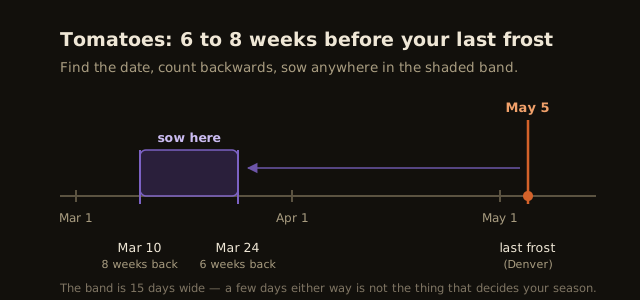
- Subtract the weeks for that crop. Find the crop in the chart and count backwards on a calendar. Tomatoes at 6 to 8 weeks back from a May 5 last frost land you on March 10 to March 24. Any day in that range works. Nobody's holding you to March 10.
- Write the sowing date on the packet. Write the date straight on the packet in pen, then stack the packets in date order in the drawer. Come January you won't redo any of this arithmetic, and you won't miss the onions while you're sitting there waiting on the tomatoes.
Do the slow ones first. Celery and artichokes want 8 to 12 weeks and onions want 8, so all three get sown while the tomato packets are still in the drawer, and they're the ones people forget about until it's too late to do anything with them.
Do not start these indoors at all
Some crops come out worse for the trouble. These go straight in the ground, and the tray does nothing for them:
Carrots, radishes, parsnips and beets. The part you're going to eat is the root. Knock it about while it's forming and you'll pull up something forked and twisted instead. A root gets one go at being straight.
Beans, peas and corn. They come up fast and they hate having their roots messed with. A bean sown straight in the ground will overtake a transplanted one inside two weeks.
Cucumbers and squash. You can start these indoors, and plenty of people do, mostly to buy two or three weeks back in a short season. Which is fair enough. If your season is comfortable, though, sowing them straight in the ground gets you a better plant for less work, so this one depends on where you live more than the other two do.
There's a pattern under all of that, and it takes two things at once. If the seed is big and it comes up fast, put it in the ground. The tray is for the small fussy seed that comes up slowly and needs a head start it can't get outdoors in cold soil.
Started too early? You are fine
This is the most common seed-starting mistake there is, and it's nowhere near fatal. February turns nice for a week, the sun comes through the kitchen window like it means it, and the tomatoes go in six weeks ahead of schedule.
What you get is a leggy seedling: tall, thin, pale, leaning hard at the glass. That's the plant reaching for light it isn't getting, in a pot it outgrew a while back, waiting on weather that isn't ready for it. All three at once.
The fixes, in order of how much they help. Get the light closer. A shop light hung a couple of inches above the leaves does more than the sunniest windowsill you own. Pot the plant up into something bigger so it isn't root-bound while it waits. And with tomatoes, bury the stem deep when you transplant. They root all along the buried stem, which means a leggy tomato planted deep ends up stronger than a stocky one planted shallow.
And if it's genuinely too far gone, go buy a transplant. Nobody's keeping score. A four-dollar plant off a nursery bench in May beats a tray of exhausted seedlings, and the seed you didn't use keeps until next year.
Starting late is the easier problem. A tomato sown three weeks behind schedule fruits about three weeks later, and that's the whole penalty, unless your first fall frost gets there before the fruit ripens. Check that before you sow anything late.
The part the average hides
Everything above hangs off a median, which is the date frost is finished by in half of years. The other half of years, it isn't.
That barely matters on the day you sow. It matters enormously on the day you carry the trays outside. The dates here will get your timing right, and they still can't tell you whether next Tuesday night drops to 30°F, because nothing built on thirty-year averages can do that.
So the last step of seed starting happens off the calendar. You check the forecast the week you plant out, every single time, and you stay willing to go out at ten at night and carry the trays back in. That's the step that loses people whole flats of seedlings, and no chart can do it for you.
Questions people actually ask
Can you start seeds indoors too early?
Yes, and it's the usual mistake. Starting too early gives you leggy, root-bound seedlings that go outside weaker than a plant sown weeks later would have. Get the light down to within a couple of inches of the leaves, pot them up if they outgrow the cell, and plant tomatoes deep. If they're too far gone, a bought transplant is a perfectly good answer.
What does "weeks before last frost" actually mean?
It means you count backwards on a calendar from your own typical last spring frost. If your last frost is April 15 and the crop says 6 to 8 weeks, you're sowing somewhere between February 18 and March 4. That frost date is the anchor and every other date on the page hangs off it.
Do I need a grow light?
For anything you start more than about four weeks before the last frost, effectively yes. A windowsill in February gives you short, weak, low-angle light, which is exactly the thing that makes seedlings stretch. An ordinary shop light hung a couple of inches over the leaves fixes it, and it doesn't have to be sold to you as a grow light.
Is a frost date the same as a hardiness zone?
No, and mixing them up costs people seedlings. A hardiness zone describes how cold your worst winter night gets, which is what tells you which perennials survive it. A frost date tells you when the spring freezes stop. Two towns in the same zone can have last frosts weeks apart.
My city is not in your table. Now what?
Use the free frost date lookup, which works the date out for your own address instead of the nearest airport. That matters more than it sounds like it does. Airports sit out in open ground, and a valley bottom or a hilltop can run a week or two away from one.
Sources
Every planting date, depth, and temperature on this page traces to these university extension guides. Where they differ, the ranges above hold the whole spread.
- NOAA National Centers for Environmental Information — U.S. Climate Normals 1991–2020, freeze/frost probabilities
- Clemson Cooperative Extension — Tomato
- Clemson Cooperative Extension — Pepper
- Clemson Cooperative Extension — Eggplant
- Clemson Cooperative Extension — Basil
- Utah State University Extension — Peppers in the Garden
- Utah State University Extension — Broccoli in the Garden
- Utah State University Extension — Lettuce in the Garden
- University of Maryland Extension — Growing onions in a home garden
- University of Maryland Extension — Growing peppers in a home garden
- University of Minnesota Extension — Growing basil
Once the dates are on the packets, the next question is where everything goes. The spacing calculator works out how far apart everything goes and how many plants a bed will actually hold, and the companion planting chart covers which crops belong next to each other — with the popular pairings that turn out to be folklore labeled as folklore.
For the date this whole page hangs on, the frost date lookup is free and needs no signup. It computes your odds from 26 years of daily records for your own patch of ground, and it shows the 1-in-10 and 9-in-10 dates alongside the average, which is the honest way to read a frost date.