
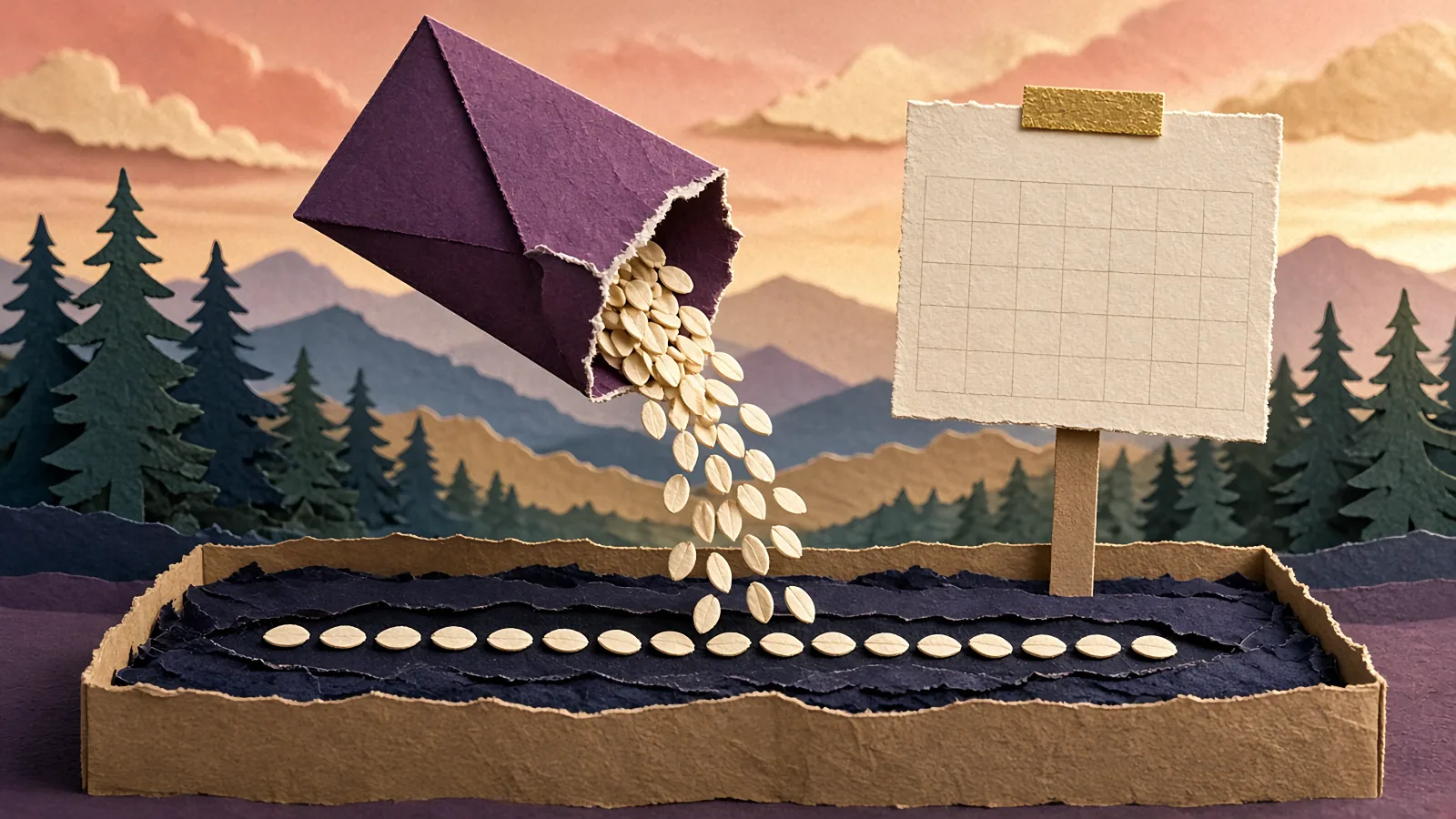
One seed potato per five-gallon bucket. University of New Hampshire Extension puts it at five gallons of soil volume per plant, so a standard bucket holds exactly one. Start with 6 to 8 inches of potting mix, cover the seed potato with another 6, and keep adding as the stems grow.
One bucket, one plant
The question everybody asks is what size container. The question that decides your crop is how many potatoes go in it, and almost nobody answers that one.
University of New Hampshire Extension does. Their guidance is to plan for five gallons of soil volume for each plant.
So the arithmetic is short. A five-gallon bucket grows one potato plant. Not three, not "a few". One. A 15-gallon tub grows three. And when the same page says an ideal container is about 2-3 feet tall with a 10-15 gallon capacity, that is not a contradiction — it is two or three plants' worth, in one deeper container.
Crowding is the commonest way this goes wrong, and it fails quietly. The plants come up, the foliage looks healthy all summer, and you tip out a bucket of marbles in September.
Filling it, which is not like filling a pot
A potato is not planted at a depth and left. You start the bucket half empty and fill it as the plant grows, because the tubers form above the seed potato rather than below it.
- Drill the holes first. A bucket has no drainage until you make some. Half a dozen holes in the bottom with any drill bit you own. Potatoes sitting in water rot, and a sealed bucket in August is a slow cooker.
- Six to eight inches of potting mix. New Hampshire's number, and no more than that. You are deliberately leaving most of the bucket empty. Use potting mix rather than garden soil — a bucket of garden soil sets like a brick.
- One seed potato, eyes up. Sit it on the surface. Our own sourced planting depth for potatoes is 3 to 6 inches, and the next step is what gets you there.
- Cover with another six inches. New Hampshire again: after placing the seed potatoes, cover them with an additional six inches of potting soil. That is the plant in the ground, and the bucket is now roughly half full.
- Keep adding soil as the stems rise. This is the part people skip. As the season goes on, keep adding more mix, leaving about six inches of foliage exposed at any time. Every inch of buried stem is somewhere a tuber can form.
- Stop when the bucket is full. Then let it grow. From here it is water and sun, and the plant does the rest.
Potatoes are half-hardy, so a light frost does not faze the foliage and a hard freeze does. A bucket is the one container you can pick up and move against a wall for a cold night — which is the whole argument for growing in one.
When to tip it out
Ours is a 90 to 120 day crop from planting, and the plant tells you before the calendar does.
The tops yellow and flop. That is not the plant dying on you, it is the plant finishing — it has moved everything it has into the tubers, which is exactly the point. Give it a week or two after that and the skins toughen enough to store.
Then tip the whole bucket onto a tarp. That is the part that makes this worth doing: no digging, no fork through a potato, no hunting. Everything the plant made is in one bucket of soil and you sort it with your hands.
What a bucket does not fix
Two honest limits, because a page that says buckets solve everything is a page nobody should trust.
A bucket dries out faster than the ground. Less soil, more surface, and dark plastic in the sun. In July that is a daily job, not a twice-a-week one, and a potato that dries out and gets watered again grows knobbly and hollow.
It will not out-yield a row. One plant makes what one plant makes. The bucket buys you somewhere to grow when you have no ground and a harvest you do not have to dig for — it does not buy you more potatoes per plant.
If you are weighing a bucket against a bed for other crops, how to grow tomatoes in pots works through the container question for the crop most people try first, including the size mismatch that stalls them in July.
Questions about potatoes in buckets
How many potatoes can I grow in a 5 gallon bucket?
One plant. New Hampshire Extension's figure is five gallons of soil volume per plant, and a standard bucket is five gallons. You can plant three seed potatoes in one bucket and they will all come up, but they will share one plant's worth of soil between three and you will harvest small. One bucket, one seed potato.
Do I need to drill holes in the bucket?
Yes, and before you fill it. A bucket has no drainage otherwise, and potatoes sitting in water rot. Half a dozen holes in the base is enough, any drill bit. Food-grade buckets are worth seeking out if you can, though the plant does not know the difference.
How deep do you plant potatoes in a bucket?
Sit the seed potato on 6 to 8 inches of mix and cover it with another 6, which lands you inside the 3 to 6 inch planting depth our sources give for potatoes. Then keep adding soil as the stems grow — tubers form on the buried stem above the seed potato, so the soil you add during the season is what the crop grows into.
When do you harvest potatoes from a bucket?
When the tops yellow and flop over, plus a week or two for the skins to toughen. That is usually 90 to 120 days from planting. Then tip the whole bucket out onto a tarp rather than digging — no fork, nothing sliced in half, and you sort the crop with your hands.
Can I reuse the soil next year?
Not for potatoes. Potato diseases carry over in soil, so growing them in the same mix year after year is how you build a problem. Empty it onto a bed or a compost heap and start the bucket fresh.
Sources
Every planting date, depth, and temperature on this page traces to these university extension guides. Where they differ, the ranges above hold the whole spread.
- University of New Hampshire Extension — What is the best way to grow potatoes in containers?
- University of Maryland Extension — Growing Vegetables in Containers and Salad Tables
- University of Minnesota Extension — Growing potatoes in home gardens
- Clemson Cooperative Extension — Potato
A bucket is the cheapest way into growing something, and potatoes are the crop that suits it best — one plant, one container, and a harvest you tip out rather than dig for.
Potatoes are one crop in one container. For everything else a bucket will and will not hold — the five crops it is exactly right for, and the ones it cannot manage at any size.
For the crop most people try in a container first, how to grow tomatoes in pots covers the size question and the variety mismatch behind most container failures.